Summer in Spring TX means intense heat, occasional drought, thunderstorms, and the kind of high water usage that comes with a fully occupied household. For your home’s plumbing system, all of that adds up to stress. A few hours of preventive maintenance before summer peaks can save you hundreds, sometimes thousands, in repair costs later.
This checklist covers everything a Spring TX homeowner should inspect, test, or schedule before the Texas heat is fully underway. Work through it room by room and note anything that needs attention so you can prioritize what to address yourself and what to call a professional for.
Kitchen Plumbing Checks
- Under-sink inspection: Pull out everything stored under the kitchen sink and look for moisture, water stains, rust, or soft spots in the cabinet floor. These are signs of a slow drip or supply line leak.
- Garbage disposal test: Run the disposal with cold water for 30 seconds. Listen for grinding or unusual vibration. Clean it with a mixture of ice cubes and rock salt, followed by cold water, to break up buildup.
- Drain flow check: Run the kitchen sink at full flow for 20 seconds. If it drains slowly, you have a partial clog developing. Address it now before summer cooking puts more demand on the line.
- Dishwasher supply line: Check the hose behind the dishwasher for bulging, cracking, or kinking. These braided supply lines typically last 5 to 7 years.
- Refrigerator ice maker line: Check the water supply line to your refrigerator ice maker, especially if it runs through the back of a cabinet. Small drips from these lines often go unnoticed for months.
Bathroom Plumbing Checks
- Toilet leak test: Add a few drops of food coloring to the toilet tank. Wait 15 minutes without flushing. If color appears in the bowl, the flapper valve is leaking and needs replacement. A running toilet can waste 200 gallons of water per day.
- Toilet base inspection: Check the floor around the base for moisture or soft flooring material. A wax ring that’s failing will allow water to seep out slowly over time, causing significant subfloor damage.
- Shower and tub drain speed: Test how quickly your shower and tub drain. A slow drain in summer often means hair and soap buildup that will fully clog with increased use. A drain snake or hair-catching strainer is the easy fix.
- Showerhead flow: If your showerhead flow seems reduced, mineral deposits may be restricting the spray. Remove the head and soak it in white vinegar overnight to dissolve scale.
- Supply line inspection: Check the supply lines under every toilet and sink for corrosion at the fittings, bulging hoses, or moisture on the shut-off valves.
Water Heater Inspection
Your water heater works especially hard in summer when ambient temperatures in garages and utility rooms can exceed 110 degrees. Add these checks to your summer routine:
- Check for sediment: If your water heater makes popping or rumbling sounds, sediment has built up on the bottom of the tank. Flushing the tank annually removes this buildup and extends the life of the unit.
- Test the pressure relief valve: Lift the lever slightly and let it snap back. You should hear water rush into the drain tube. If nothing happens or the valve drips continuously afterward, it needs replacement.
- Inspect the anode rod: The anode rod is a sacrificial metal rod that prevents tank corrosion. It should be inspected every 3 to 5 years and replaced when more than 50 percent is depleted.
- Check the temperature setting: 120 degrees Fahrenheit is the recommended setting. Higher settings accelerate sediment buildup and create scalding risk. Lower settings can allow bacteria growth.
If your water heater is more than 10 years old or you’re noticing rust-colored water, reduced hot water capacity, or visible corrosion on the unit, have a water heater professional in Spring TX inspect it before summer demand peaks.
Outdoor Plumbing and Irrigation Checks
- Hose bib inspection: Turn on each outdoor faucet and check for drips at the spout or around the handle. A leaky hose bib wastes water continuously and can freeze and burst if left unaddressed into cooler months.
- Irrigation system startup: Run each zone of your irrigation system manually and walk the yard while each runs. Look for broken sprinkler heads, zones that aren’t reaching coverage areas, and unusually soggy patches between heads that might indicate an underground leak.
- Backflow preventer check: If you have an irrigation system, it should have a backflow prevention device. Make sure it’s intact and not showing signs of leakage or corrosion.
- Hose connections: Check garden hose fittings at both the hose bib and the sprayer for leaks. Replace worn washers to prevent dripping connections.
Main Water Line and Meter Check
This one takes about five minutes and can catch a major hidden leak before you receive a shocking utility bill:
- Turn off all water-using appliances and fixtures in your home.
- Make sure no one is using water (no ice makers running, no toilets recently flushed).
- Locate your water meter, typically near the street in a covered box.
- Note the reading and the leak indicator (usually a small triangle or wheel on the meter face).
- Wait 15 minutes without using any water.
- Check the meter again. If the reading changed or the leak indicator moved, you have water moving through your system and likely a hidden leak somewhere.
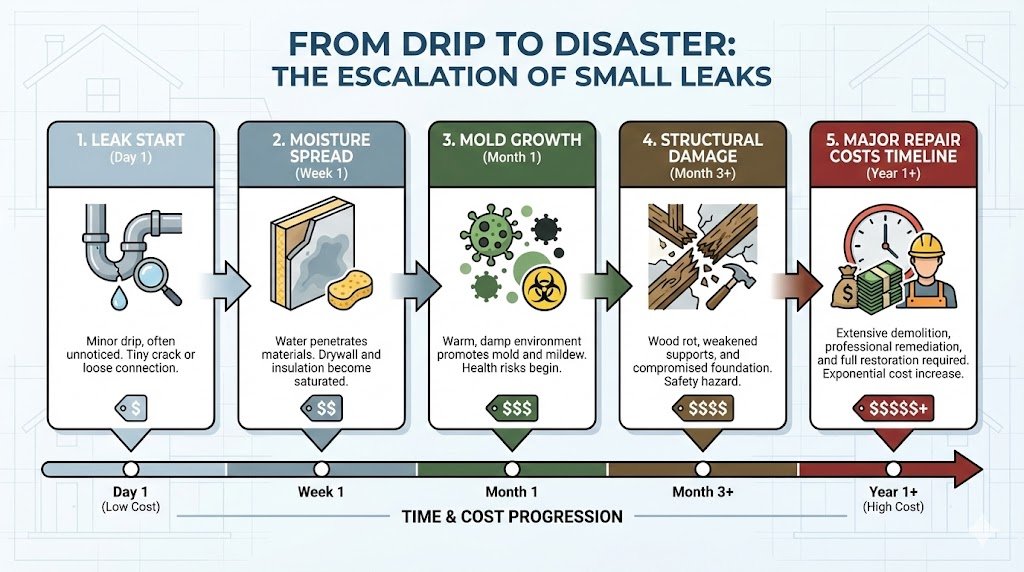
If you find a hidden leak, call a licensed plumber in Spring TX to locate and repair it. Hidden water leaks can cause serious damage to your foundation, walls, and flooring if left unaddressed.
Signs That Need Professional Attention Right Away
Some of the items on this checklist are safe for homeowners to handle. Others need a licensed plumber. Call Fisher Family Plumbing promptly if you find any of these:
- Water meter moving with all fixtures off
- Hot spots on your floors (sign of a hot water slab leak)
- Low water pressure throughout the house
- Sewage odor inside or outside the home
- Visible pipe corrosion or rust staining around fixtures
- Multiple slow drains (could be main line blockage)
- Discolored or smelly hot water from your water heater
Our team offers full plumbing inspections, drain cleaning, water heater service, leak detection, and emergency plumbing for Spring TX homeowners. Catching problems early is always less expensive than dealing with them after they’ve caused damage.
Get Your Summer Plumbing in Order
Work through this checklist now, before the Texas heat peaks and your household is running at full capacity. If you find anything that needs professional attention, we’re here to help.
Call Fisher Family Plumbing at (832) 844-7200 or schedule a service appointment online. We’re located at 28861 Llano River Loop, Spring TX 77386 and proudly serve Spring, The Woodlands, Conroe, Tomball, and the entire North Houston area.