Your home’s plumbing system is mostly hidden behind walls, under floors, and inside cabinets, so it is easy to overlook until something goes wrong. The problem is that even small plumbing issues can turn into expensive repairs when they are ignored. A regular maintenance routine can help homeowners catch leaks early, conserve water, and extend the life of pipes, fixtures, and appliances.
Following a monthly plumbing checklist is a simple way to keep your home safe, efficient, and functioning properly. These inspections only take a small amount of time, but they can help prevent costly water damage, unexpected repairs, and larger plumbing problems down the road.
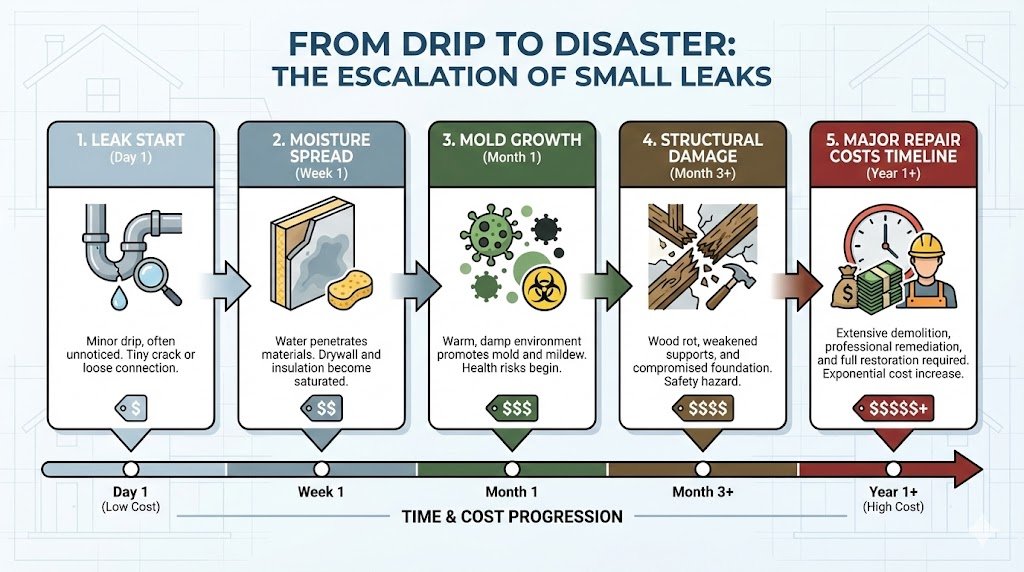
Water damage is one of the most common and costly problems homeowners face, and many plumbing issues begin with small warning signs that are easy to miss. Performing a monthly plumbing inspection can help you catch problems early and reduce the risk of more serious damage.
Regular inspections can help prevent:
Hidden pipe leaks
Mold and mildew growth
Foundation or structural damage
Unusually high water bills
Plumbing fixture and appliance failures
A simple monthly plumbing checklist can go a long way in helping homeowners identify small issues before they turn into expensive repairs or major property damage.
Water damage is one of the most common and costly problems homeowners face, and many plumbing issues begin with small warning signs that are easy to miss. Performing a monthly plumbing inspection can help you catch problems early and reduce the risk of more serious damage.
Regular inspections can help prevent:
Hidden pipe leaks
Mold and mildew growth
Foundation or structural damage
Unusually high water bills
Plumbing fixture and appliance failures
A simple monthly plumbing checklist can go a long way in helping homeowners identify small issues before they turn into expensive repairs or major property damage.
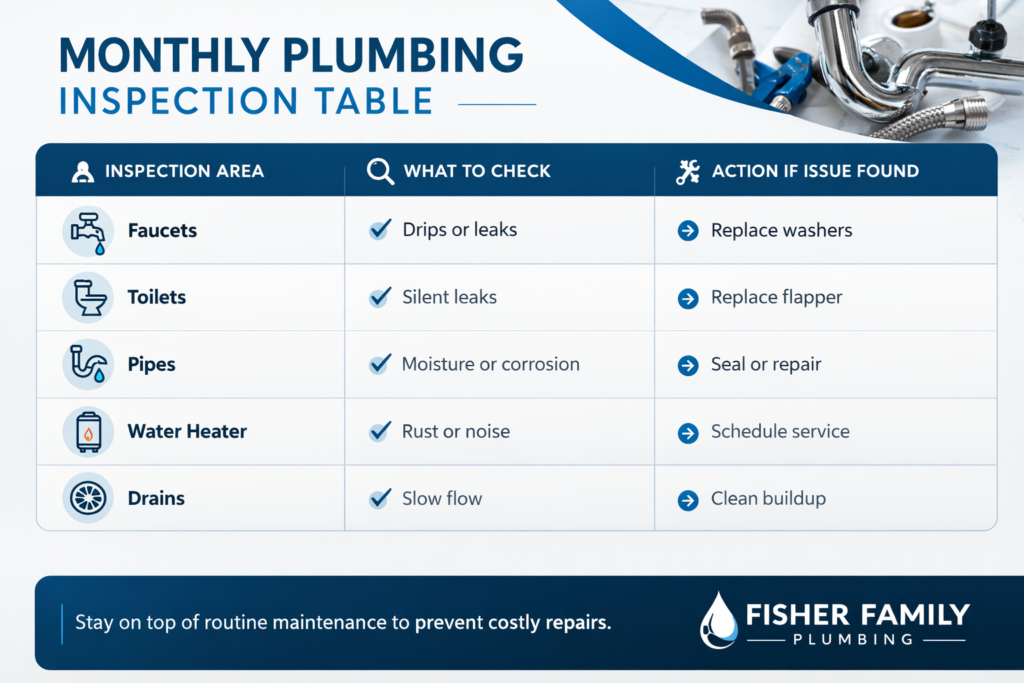
Start by inspecting the plumbing areas that are easiest to access, especially under sinks, around exposed pipes, and near frequently used faucets. Small leaks are often easy to miss at first, but over time they can waste water, increase utility bills, and lead to cabinet damage, mold, or corrosion.
Look for signs such as:
Drips under sinks
Moisture around pipe joints and fittings
Rust or corrosion on exposed pipes
Slow-dripping faucets
Musty or unusual odors
Even a minor drip can waste a surprising amount of water over time, which is why early detection is so important.
Water pressure that is too high can put unnecessary strain on pipes, fixtures, appliances, and supply lines throughout the home. Checking for pressure-related warning signs can help homeowners catch plumbing stress before it leads to leaks or equipment failure.
Common signs of water pressure problems include:
Banging or knocking sounds in pipes
Leaking appliance hoses
Rapid wear on faucets and fixtures
Inconsistent or fluctuating water flow
If you notice any of these issues, it may be a good idea to have your pressure regulator checked or installed to help keep your plumbing system operating within a safe range.
Toilet leaks are often silent, which makes them easy to miss. Even when they are not obvious, they can waste a significant amount of water over time and lead to higher utility bills.
A simple way to test for a toilet leak is:
Add a few drops of food coloring to the toilet tank
Wait 10 to 15 minutes without flushing
If color appears in the bowl, the toilet may have a leak
Catching toilet leaks early can help prevent unnecessary water waste and reduce the risk of higher monthly water bills.
Slow drainage is often an early sign of buildup developing inside your pipes. Identifying these problems early can help prevent more serious blockages, backups, and drain damage later on.
Pay close attention to drainage in:
Kitchen sinks
Bathroom sinks
Bathtubs and showers
Floor drains
Addressing minor clogs early can help keep your plumbing system flowing properly and reduce the chances of a more serious drain problem in the future.
Slow drainage is often one of the first signs of buildup forming inside your pipes. Catching drainage issues early can help prevent larger clogs, backups, and unnecessary strain on your plumbing system.
Pay close attention to drainage in:
Kitchen sinks
Bathroom sinks
Bathtubs and showers
Floor drains
Taking care of minor clogs early can help prevent complete blockages and reduce the risk of pipe damage over time.
Your water heater should be checked regularly for signs of wear, leaks, or reduced performance. A quick monthly inspection can help identify small issues before they lead to bigger repairs or equipment failure.
During your inspection, look for:
Rust or corrosion on the tank or fittings
Water pooling around the base
Unusual noises during operation
Inconsistent or incorrect temperature levels
Sediment buildup and wear inside the tank can reduce efficiency and shorten the lifespan of your water heater, which is why regular checks are so important.
Not all plumbing problems are immediately visible. In many cases, water damage develops quietly behind walls, under flooring, or around fixtures before homeowners notice there is an issue.
Watch for warning signs such as:
Water stains on ceilings or walls
Peeling or bubbling paint
Warped or damaged flooring
Musty odors
Mold or mildew growth near walls or baseboards
Catching hidden moisture early can help prevent more serious structural damage and support a more effective monthly plumbing maintenance routine.
Make sure your home’s shutoff valves are easy to locate and working properly. In a plumbing emergency, a functional shutoff valve can make a major difference in limiting water damage.
Be sure to locate and test:
The main water shutoff valve
Sink supply valves
Toilet shutoff valves
Outdoor faucet shutoff valves
Knowing where these valves are and confirming they work properly can help you respond more quickly if a leak or burst pipe occurs.
The hoses connected to household appliances can wear out over time and may eventually crack, leak, or burst if they are not inspected regularly.
Check the hoses connected to:
Washing machines
Dishwashers
Refrigerator ice makers
If older rubber hoses are in place, consider upgrading to braided stainless steel supply lines for better durability and added peace of mind.
Outdoor plumbing is easy to forget, but it can cause major problems if leaks or damage go unnoticed. Exterior plumbing issues can affect your foundation, increase water waste, and damage landscaping.
Inspect outdoor plumbing components such as:
Garden hose connections
Outdoor faucets
Irrigation systems
Visible exterior pipes
Regular outdoor inspections can help catch leaks early and protect both your home and your property.
When you need reliable, professional plumbing support, Fisher Family Plumbing is here to help. Backed by experience, quality workmanship, and a commitment to customer satisfaction, their team provides dependable service for everything from routine plumbing maintenance to emergency repairs and new installations.
With a focus on honest service and lasting results, Fisher Family Plumbing helps homeowners keep their plumbing systems running safely and efficiently. To learn more about available services or get help with your next plumbing project, visit Fisher Family Plumbing for trusted local plumbing solutions.
A sudden increase in your water bill can be one of the first signs of a hidden plumbing issue. If your household water use has not changed but your bill is noticeably higher, there may be an undetected leak somewhere in the system.
When reviewing your bill, compare:
Your current bill to previous months
Seasonal usage patterns
Unusual spikes in water consumption
Checking your water bill each month is a simple but effective way to spot possible plumbing problems early.
Routine plumbing inspections can help homeowners stay ahead of small problems before they turn into expensive repairs. Even a simple monthly check can make a meaningful difference in the performance and lifespan of your plumbing system.
Regular inspections can help provide:
Lower repair costs
Better water efficiency
Longer fixture and appliance lifespan
Reduced risk of mold and water damage
Greater peace of mind
Preventive maintenance helps protect both your home and your budget over time.
Even with good intentions, some maintenance habits can lead to bigger plumbing problems if they are ignored or handled incorrectly.
Common mistakes include:
Ignoring small leaks
Using drain cleaners too often
Delaying needed repairs
Overlooking routine water heater maintenance
Neglecting outdoor plumbing inspections
Avoiding these issues can help extend the life of your plumbing system and reduce the risk of more serious damage.
Many basic plumbing checks can be handled by homeowners, but some issues should always be evaluated by a licensed professional. If you notice any of the following warning signs, it is best to schedule service before the problem gets worse.
Call a professional plumber if you notice:
Persistent leaks
Significant corrosion on pipes or fittings
Repeated clogs or backups
Sudden water pressure problems
Signs of hidden pipe damage
Monthly inspections are helpful, but they work best when paired with professional plumbing service whenever a serious issue is suspected.
Your plumbing system works behind the scenes every day, and regular maintenance is one of the best ways to protect it. A monthly plumbing checklist only takes a short amount of time, but it can help homeowners catch minor issues early, improve water efficiency, and reduce the risk of costly repairs.
By staying proactive and following a consistent inspection routine, homeowners can help protect their property, avoid unexpected plumbing emergencies, and keep their plumbing system running smoothly. Preventive maintenance is one of the smartest ways to care for your home.