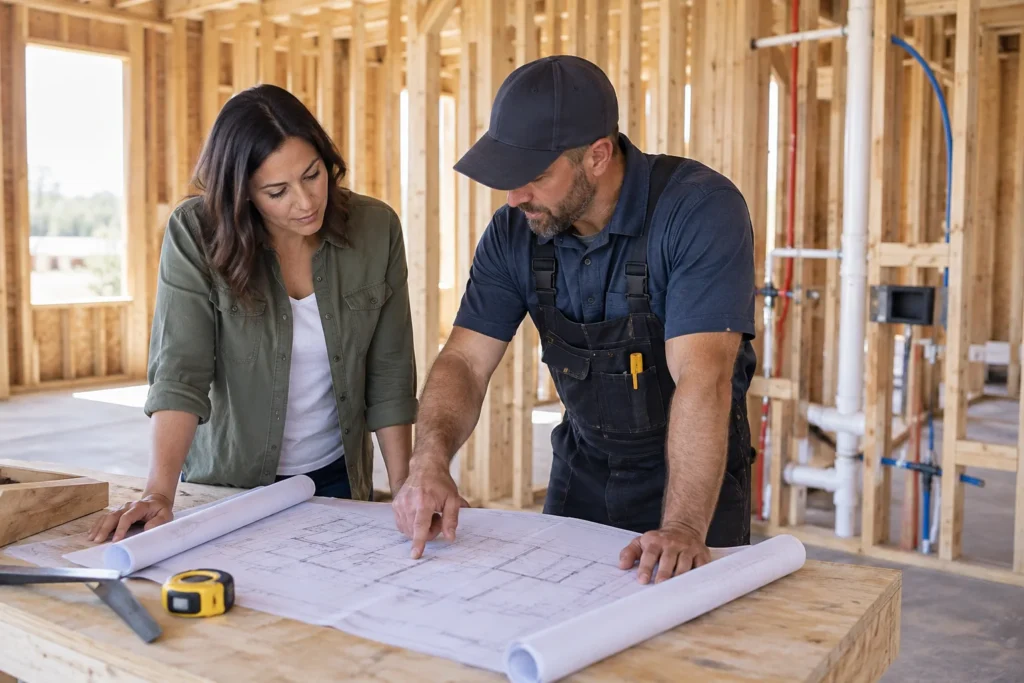
A plumber should usually become involved before the plumbing layout is finalized and before rough-in work begins. Early involvement gives the project team time to coordinate fixture locations, water and drain lines, sewer connections, the water heater, and other plumbing needs before walls, floors, cabinets, and finishes make changes more difficult.
The plumber may not begin installing pipes during the first planning conversation. That is the important distinction. Planning the plumbing and physically installing the plumbing happen at different stages.
The exact construction sequence depends on the home design, foundation, local permitting requirements, and how the builder coordinates other trades.
How Early Should You Hire a Plumber for New Construction?
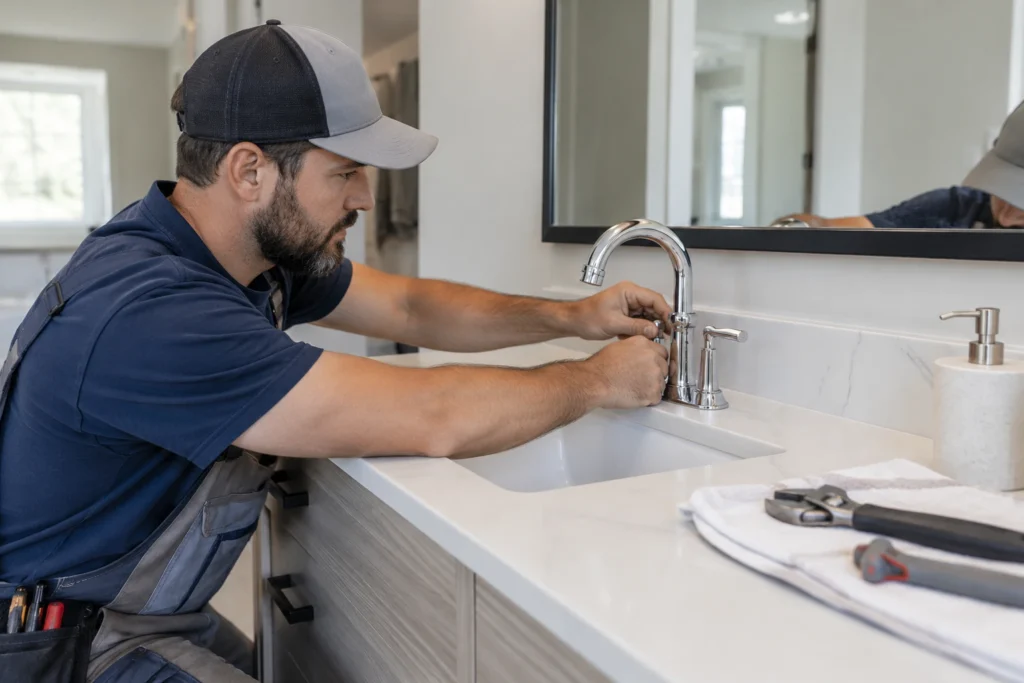
The plumber should generally be part of the conversation while the home’s plumbing locations are still flexible.
Waiting until drywall or cabinets are going in can limit options that would have been easier to address earlier.
Before the plumbing layout becomes difficult to change
Early planning should account for spaces that need water, drainage, or plumbing connections, including:
- Kitchens
- Bathrooms
- Laundry rooms
- Utility rooms
- Water-heater locations
- Outdoor faucets
- Utility sinks
- Appliances that need water or drainage
The goal is not necessarily to have every faucet purchased immediately. The project team does need a reasonably clear picture of where fixtures and plumbing-dependent equipment will be located.
Fisher Family Plumbing provides residential new construction plumbing for projects ranging from new homes to residential additions and detached living spaces.
Before underground or under-slab plumbing is covered
Some homes require plumbing to be installed beneath the slab or underground before later construction makes those areas inaccessible.
Those locations need to be coordinated before concrete, backfill, flooring, or other construction covers the work.
The exact inspection requirements depend on the jurisdiction. As a general code principle, plumbing rough work subject to inspection is reviewed before it is concealed. The project team should confirm the applicable local requirements before proceeding to the next stage.
Before plumbing rough-in begins
By rough-in, the plumber should already understand the major layout.
Plumbing rough-in is the stage when the hidden water, drain, waste, and vent components are installed before walls and ceilings are closed.
Rough-in is not the ideal time to discover that:
- A toilet needs to move
- The kitchen island changed locations
- A freestanding tub was added
- The laundry room moved
- A different type of water heater is planned
- A refrigerator needs a water connection somewhere unexpected
Some changes may still be possible, but they can require coordination or rework that earlier planning could have avoided.
What Should Be Decided Before Plumbing Rough-In?
You do not need every decorative detail finalized, but the plumber needs enough information to prepare the correct system.
Fixture locations
Important locations generally include:
- Toilets
- Bathroom sinks
- Showers
- Bathtubs
- Kitchen sinks
- Laundry connections
- Utility sinks
- Outdoor faucets
Changing a paint color later is simple. Moving a toilet or shower after the drain system has been installed is a different type of change.
Appliance and equipment connections
Plumbing also has to account for equipment that uses water or drainage.
Depending on the home, that can include:
- Dishwasher connections
- Refrigerator water lines
- Washing-machine hookups
- Water heaters
- Garbage disposals
- Water-treatment equipment
Fisher Family Plumbing’s current new-construction service information includes kitchen plumbing, dishwasher connections, refrigerator water lines, laundry hookups, water heaters, and utility-sink plumbing.
Optional plumbing systems
Construction is also a useful time to discuss systems the homeowner may want later.
Examples can include:
- Whole-house water filtration
- Reverse osmosis drinking-water treatment
- Hot-water recirculation
- Other water-treatment equipment
These systems do not belong in every home. The benefit of discussing them early is that the project can account for equipment location, plumbing connections, electrical needs where applicable, and maintenance access before the home is finished.
For homeowners considering treatment throughout the home, Fisher Family Plumbing also provides residential water filtration.
What Happens During New Construction Plumbing?
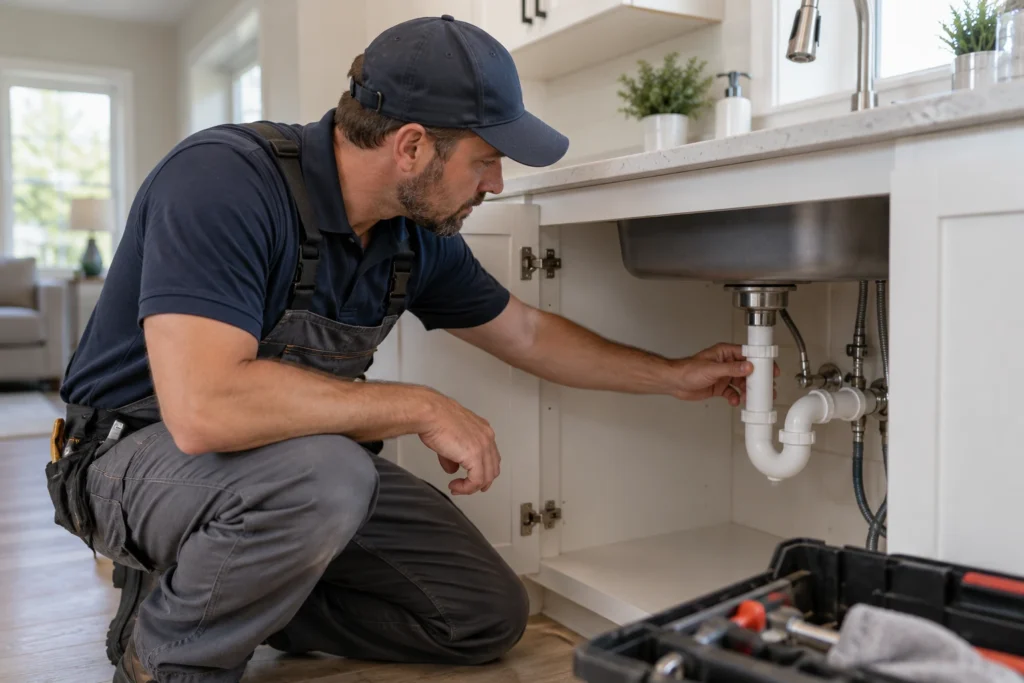
A residential plumbing project generally develops in stages rather than being completed during one visit.
1. Early planning and coordination
This is where the plumber or plumbing contractor reviews the information needed to prepare for installation.
That may include:
- Current plans
- Fixture locations
- Number of bathrooms
- Kitchen layout
- Laundry location
- Water-heating needs
- Construction schedule
- Sewer or utility information when known
The builder, homeowner, and plumber should also determine who is responsible for permitting, inspection scheduling, fixture purchasing, and coordination with other trades.
2. Underground or foundation-stage plumbing
Where the construction method requires it, certain drainage, sewer, or water piping may need to be installed before the slab or other building components are completed.
This is one reason the plumber should not be brought into the project at the last minute.
3. Rough-in plumbing
During rough-in, the plumber installs the hidden portions of the plumbing system.
Fisher Family Plumbing’s residential new-construction service currently identifies:
- Water lines
- Drain lines
- Sewer connections
- Vent piping
- Bathroom plumbing
- Kitchen plumbing
- Laundry-room plumbing
as parts of its new-construction work.
This stage prepares the house for the fixtures and equipment that will be installed later.
4. Required testing and inspections
New construction plumbing may need to be tested and inspected at specific stages before it is covered.
The International Residential Code provides for rough plumbing inspections before plumbing is concealed and a final inspection after permitted work is complete. Actual adopted codes and procedures can differ by jurisdiction, so the builder and plumbing contractor should follow the requirements for the property’s location.
In Texas, the Texas State Board of Plumbing Examiners also advises consumers to check with the local plumbing inspection department to determine whether the planned work requires a permit and inspection.
5. Fixture and equipment installation
Once the home reaches the appropriate finishing stage, the plumber returns to install and connect fixtures and plumbing equipment.
Depending on the project, that may include:
- Toilets
- Sinks
- Faucets
- Showers
- Tubs
- Laundry hookups
- Water heaters
- Outdoor faucets
- Utility sinks
This is why the plumbing rough-in has to match the fixtures that will eventually be installed.
6. Final connections and system checks
Near project completion, plumbing work includes finishing connections and checking the system as appropriate before turnover.
This should not be confused with the local building official’s final inspection. The plumber completes the plumbing work, while the authority having jurisdiction determines the required governmental inspections and approvals.
Why Does Early Plumbing Planning Matter?
Plumbing does not exist independently from the rest of the house.
Plumbing affects other parts of the build
Fixture and piping locations can interact with:
- Framing
- Cabinets
- Countertops
- Electrical work
- HVAC
- Flooring
- Drywall
- Appliances
For example, moving an island sink is not merely a countertop change if the drain and water lines were already positioned for the previous layout.
Late changes may create rework
A late change does not automatically mean a major construction problem, but it can require work that would not have been necessary if the change had been made before rough-in.
Possible effects include:
- Moving piping
- Modifying framing
- Adjusting cabinets
- Opening completed surfaces
- Coordinating with other trades
- Revising the construction schedule
This is why plumbers should have reasonably current plans before installing hidden plumbing.
Future maintenance access matters too
Early planning is not only about getting pipes to the correct locations.
Equipment, valves, filters, water heaters, and other serviceable components also need practical access after the house is finished.
A plumbing system can be hidden from view without making every service point difficult to reach.
What Information Should You Have Before Calling a New Construction Plumber?
You do not need a perfect construction package before making the first call.
However, the more project information available, the easier it is to discuss scope and timing.
Useful information includes:
- Current floor plans
- Project address
- Builder or general contractor information
- Approximate construction schedule
- Number of bathrooms
- Kitchen layout
- Laundry-room location
- Planned fixture locations
- Water-heater preferences
- Appliance plans
- Water-treatment goals
- Known sewer or water-service information
- Special plumbing features
If some selections are still undecided, identify them early rather than waiting until the plumbing is being installed.
Homeowners and builders can schedule a consultation to discuss the project scope before rough-in begins.
When Should Plumbing Fixtures Be Selected?
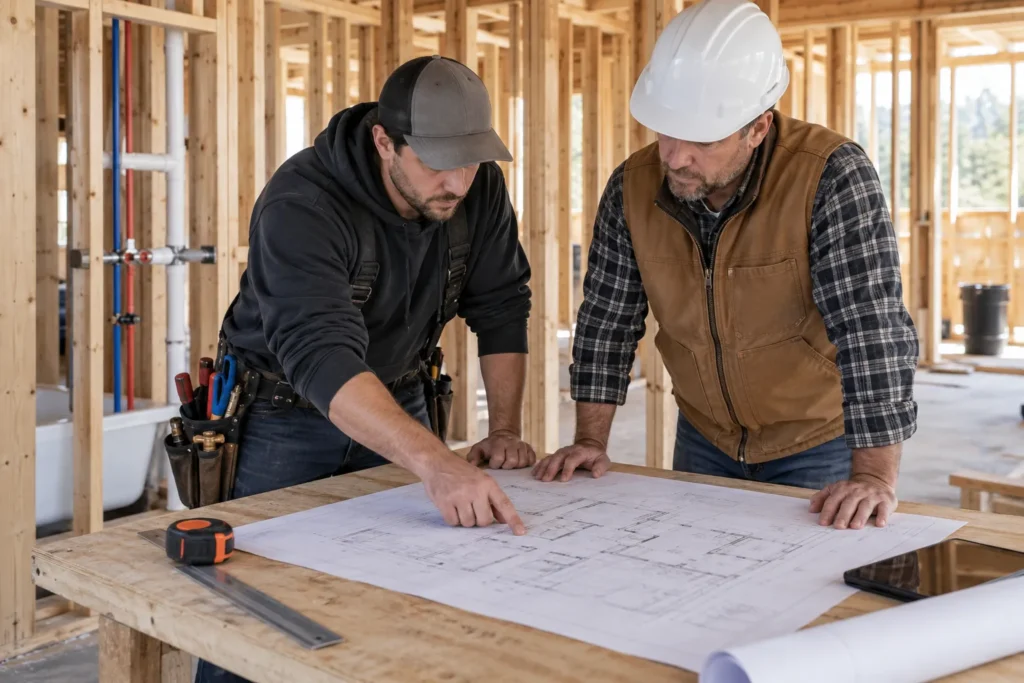
You do not necessarily need every fixture physically purchased before the first plumbing meeting, but important fixture types and specifications should be known early enough for the plumber to prepare the correct connections.
Why fixture specifications can matter
Fixtures that look similar in a showroom may have different installation requirements.
Planning can be particularly important for items such as:
- Freestanding tubs
- Wall-mounted faucets
- Specialty shower systems
- Kitchen sinks
- Unusual toilets
- Fixtures installed in islands
- Larger or specialty plumbing equipment
Avoid assuming every fixture can simply be swapped for another model after rough-in.
The plumber should have the relevant specifications before a fixture choice affects hidden plumbing.
When Should the Water Heater Be Planned?
The water heater should be considered early enough for the project to account for its:
- Location
- Hot-water demand
- Plumbing connections
- Space requirements
- Service access
- Fuel, electrical, or venting requirements where applicable
Fisher Family Plumbing provides water heater installation as part of its residential services and currently lists water-heater installation among its new-construction capabilities.
The goal at this stage is not to assume tank or tankless is automatically better. It is to make the equipment decision early enough to plan the home around the selected system.
Should Water Filtration Be Planned During Construction?
If whole-home filtration or another water-treatment system is being considered, new construction is a practical time to discuss where the equipment would go and how it would connect to the plumbing.
A whole-house system generally treats water before it reaches multiple fixtures, so its placement differs from a point-of-use system such as under-sink reverse osmosis.
Planning before the utility area and plumbing connections are complete can make those requirements easier to account for.
Homeowners who primarily want drinking-water treatment can also review the company’s reverse osmosis systems.
That does not mean every new home needs filtration. The water concern and selected treatment equipment should drive the decision.
Who Handles Plumbing Permits and Inspections on a New Build?
Permit and inspection responsibility should be established before plumbing work begins because the answer can depend on the project and jurisdiction.
The builder, plumbing contractor, project manager, or another responsible party may handle different parts of the process.
Texas consumers should verify local requirements because the Texas State Board of Plumbing Examiners specifically recommends checking with the local municipal plumbing inspection department to determine whether the work requires a permit and inspection.
The Responsible Master Plumber is also an important part of Texas plumbing contracting. The TSBPE states that a company offering plumbing services to the public must have a Responsible Master Plumber and a current certificate of insurance on file.
For the construction project itself, ask early:
- Who pulls the plumbing permit?
- Who requests inspections?
- Which stages require inspection?
- Who communicates with the inspector?
- What must be approved before work can be covered?
Do not assume the homeowner, builder, or plumber handles all of these responsibilities on every project.
Is There Such a Thing as Bringing the Plumber in Too Early?
Usually, an initial conversation can happen well before physical plumbing installation.
The project may still be too early for a final quote or exact installation plan if drawings are changing significantly, but early discussion can still identify decisions that need to be resolved.
It is generally easier to tell a plumber:
“We are considering a second-floor laundry room and whole-house filtration.”
during planning than after the relevant piping and utility spaces have already been completed.
What Happens If the Plumber Gets Involved Too Late?
Late involvement does not mean the project cannot be completed.
It may, however, reduce flexibility.
Potential consequences include:
- Fewer practical fixture-location options
- Changes to installed piping
- Framing modifications
- Cabinet adjustments
- Opening completed work
- Additional coordination with other trades
- Schedule changes
The closer construction gets to finished surfaces, the more systems may already depend on earlier decisions.
The best time to discuss plumbing is while the project still has room to make those decisions intentionally.
New Construction Plumbing in Spring, Texas
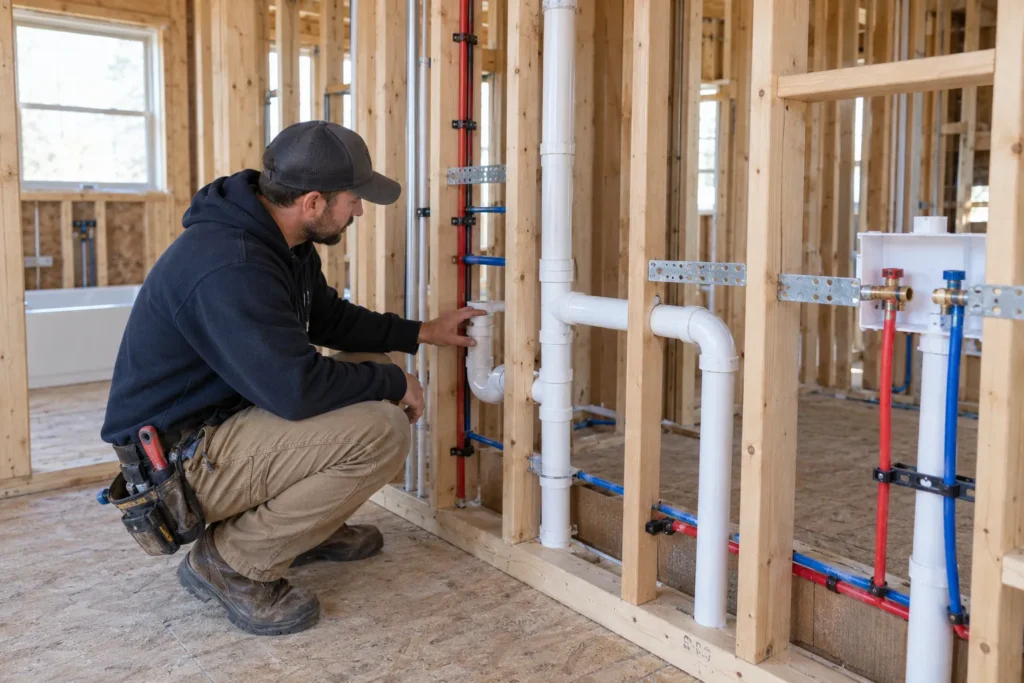
Alt text: Plumber checking plumbing connections in a newly constructed home
Fisher Family Plumbing provides new construction plumbing and residential new-construction services for homeowners, builders, and contractors.
Its current residential new-construction service page lists Spring, Porter, Kingwood, New Caney, Humble, Atascocita, and surrounding communities and includes projects such as new homes, custom homes, additions, guest houses, garage apartments, detached living spaces, and residential buildouts.
If you are planning a new home or residential construction project, involve the plumber before rough-in so the plumbing can be coordinated with the rest of the build.
Call (832) 844-7200 or request a quote and schedule a consultation to discuss the project plans and construction timeline.
Frequently Asked Questions
Should I hire a plumber before framing starts?
It can be useful to involve the plumber before or during early construction planning, particularly when fixture locations and equipment choices are still flexible. The plumber should certainly be coordinated before plumbing rough-in begins. The exact relationship between framing and plumbing work depends on the project sequence and construction method.
What does plumbing rough-in mean in a new home?
Plumbing rough-in is the stage when hidden water, drain, waste, and vent piping is installed before the related walls, ceilings, and finishes are completed. Fixtures such as toilets, faucets, and sinks are generally connected later in the project.
Do plumbing fixtures need to be selected before rough-in?
Not every decorative fixture has to be physically purchased, but important fixture types, locations, and specifications should be known early enough for the plumber to prepare the correct connections. Specialty fixtures may require more planning than standard replacements.
Can plumbing locations be changed after rough-in?
They sometimes can, but the work required generally depends on how far construction has progressed and what needs to move. Changes may affect piping, framing, cabinets, floors, walls, or other trades, so it is better to identify major layout changes before rough-in whenever possible.
Who schedules plumbing inspections during new construction?
That depends on the project’s permitting arrangement and local jurisdiction. The permit holder, builder, plumbing contractor, or another authorized project representative may be responsible for requesting inspections. Confirm responsibilities before plumbing installation begins.
Can the same plumber handle rough-in and final fixture installation?
Yes, a residential new-construction plumbing contractor may handle multiple stages of the project. Fisher Family Plumbing currently lists rough-in plumbing, water and drain lines, fixture installation, water-heater installation, and final system testing among its residential new-construction services.
External Sources
Texas State Board of Plumbing Examiners
Consumer Information
Used to verify Texas guidance regarding Responsible Master Plumbers, local permit and inspection requirements, written plumbing proposals, and contractor verification. Texas State Board of Plumbing Examiners Consumer Information
Texas Plumbing License Law
Used to verify the role and authority of the Responsible Master Plumber in Texas plumbing work and permitting. Texas Plumbing License Law
International Code Council
2024 International Residential Code, Chapter 1: Scope and Administration
Used to verify the general principle that rough plumbing inspections occur before applicable work is covered or concealed and that final inspections occur after permitted work is completed. 2024 International Residential Code Chapter 1