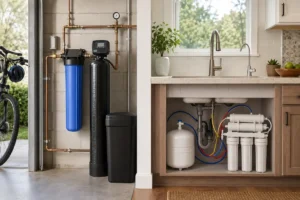

A commercial plumbing maintenance plan should generally include scheduled inspections, fixture and leak checks, drain and sewer evaluation, reviews of accessible pipes and valves, water-pressure or flow concerns, water-heating equipment where applicable, maintenance records, and clear recommendations for problems that need follow-up.
The exact plan should depend on the property. A small office, busy restaurant, retail building, warehouse, and multi-tenant property may have very different plumbing demands.
A useful plan is therefore more than a generic annual checklist. It should reflect how the building is used, which plumbing systems are most important to operations, and which problems have occurred before.
What Is a Commercial Plumbing Maintenance Plan?
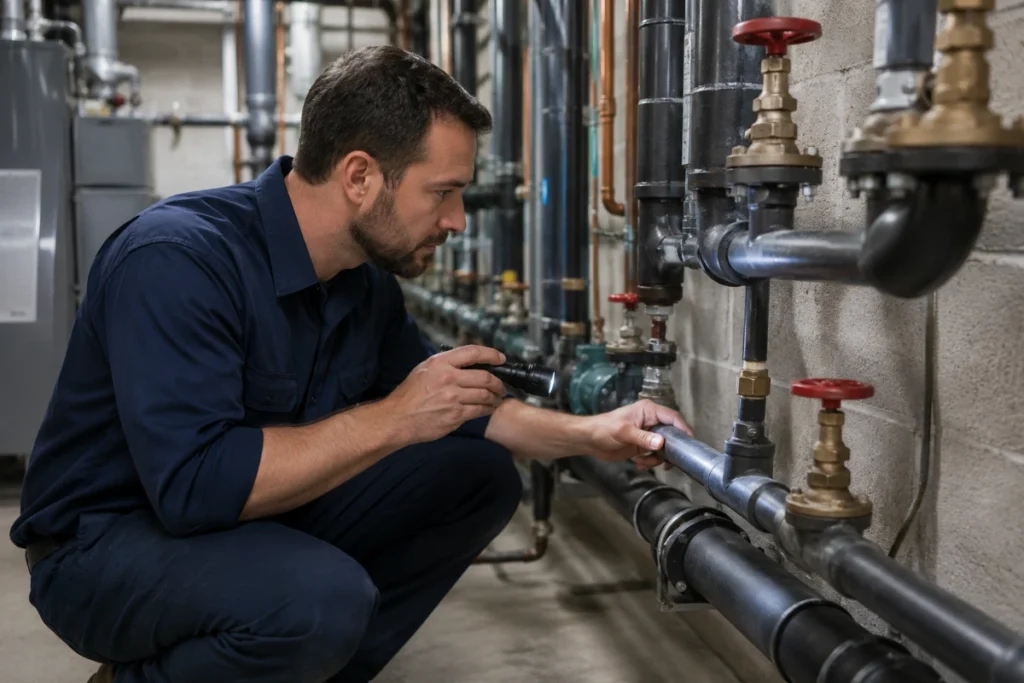
A commercial plumbing maintenance plan organizes routine inspection and preventive service around a building’s plumbing system.
It is different from simply calling a plumber whenever something breaks.
Preventive maintenance
Preventive maintenance looks for developing problems and addresses appropriate routine service before a failure becomes more disruptive.
This can include checking fixtures, accessible piping, drains, valves, and other components relevant to the property.
Corrective repair
Repair addresses an existing problem such as:
- A leaking fixture
- A damaged pipe
- A clogged drain
- A failed valve
- A sewer problem
- A malfunctioning plumbing component
Maintenance may identify the need for a repair, but that does not mean every repair is automatically included in a maintenance agreement.
Emergency plumbing
Emergency service addresses problems that require more immediate attention, such as a major leak, severe backup, burst pipe, or overflowing fixture.
A good maintenance plan should include emergency preparation, but preventive maintenance cannot guarantee that an emergency will never happen.
Fisher Family Plumbing provides commercial plumbing maintenance programs along with broader commercial plumbing services. Its current maintenance page emphasizes scheduled inspections, leak checks, drain and fixture evaluations, and ongoing maintenance recommendations.
What Should Be Included in a Commercial Plumbing Maintenance Plan?
The exact scope should be customized, but several areas deserve consideration.
1. Fixture and restroom inspections
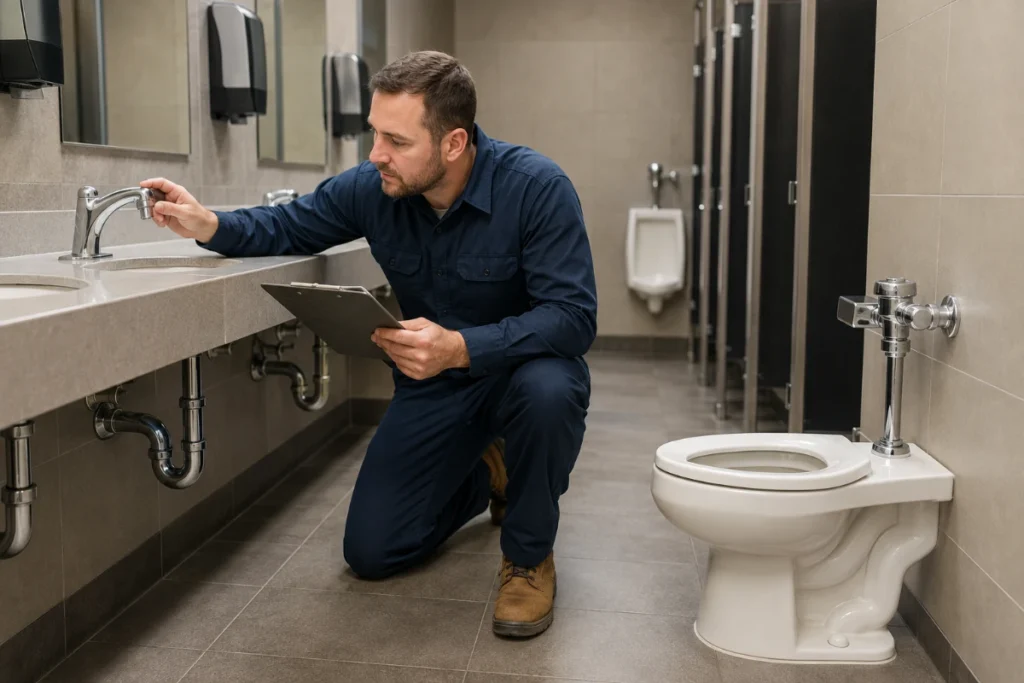
Alt text: Plumber inspecting sinks and toilets during commercial restroom maintenance
Restrooms are often among the highest-use plumbing areas in a commercial property.
A maintenance review may look for:
- Dripping faucets
- Running or malfunctioning toilets
- Loose fixtures
- Slow sinks
- Repeated clogs
- Visible leaks
- Water around fixture bases
- Unusual drain odors
- Problems with flush operation
The goal is not simply to find fixtures that are completely broken. Small changes in performance can also indicate that service is needed.
EPA WaterSense recommends that commercial and institutional facilities regularly check for leaks and track water use as part of water-management efforts.
2. Accessible pipes and connections
Visible piping should also be part of the review when applicable.
A plumber may look for:
- Moisture around connections
- Corrosion
- Damaged supports
- Deteriorating valves
- Evidence of previous leaks
- Staining near exposed plumbing
- Areas that require repeated repair
Not every concealed pipe can be evaluated during ordinary preventive maintenance. If symptoms point toward a hidden leak, additional diagnostic work may be appropriate.
3. Drain and sewer performance
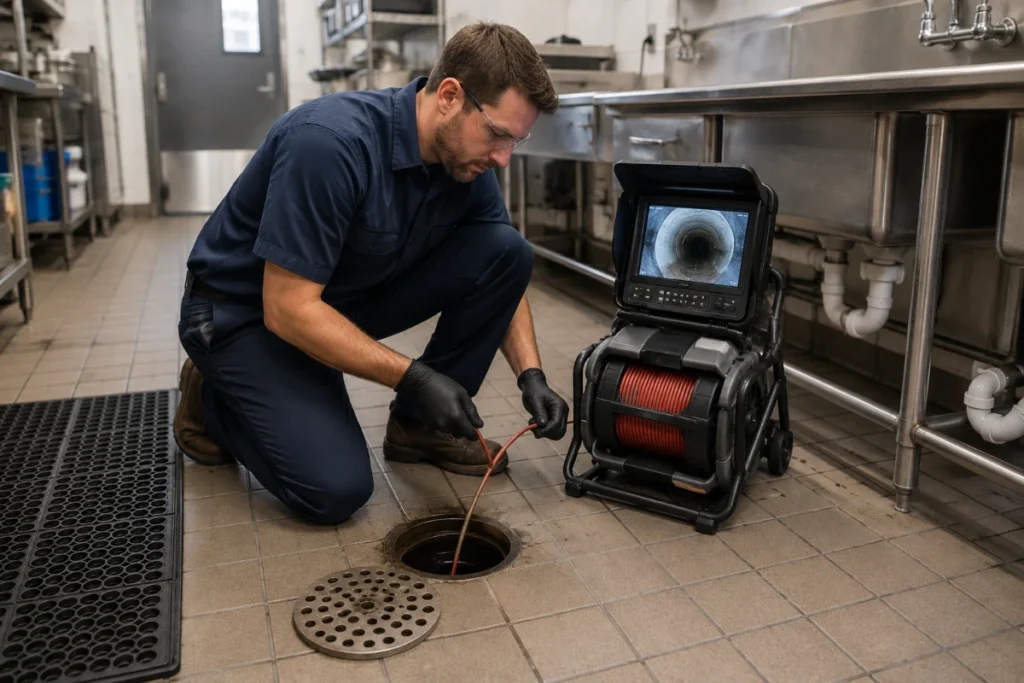
A building does not need to wait for sewage to back up before paying attention to its drainage system.
Possible warning signs include:
- Drains becoming progressively slower
- Repeated fixture clogs
- Gurgling
- Unusual drain odors
- Water returning through another fixture
- Floor drains that do not perform normally
- A history of sewer backups
A maintenance plan should document these patterns rather than treating every repeated clog as an unrelated event.
When additional sewer work is appropriate, Fisher Family Plumbing also maintains a dedicated commercial sewer-line installation and repair service.
Camera inspections, hydro jetting, or other specialized services should only be included in the maintenance plan when appropriate and when they are part of the agreed service scope.
4. Water pressure and flow concerns
Changes in water pressure or flow can affect fixtures and daily operations.
The maintenance record should note complaints such as:
- Weak flow at several fixtures
- Pressure that changes unexpectedly
- Fixtures operating differently than they previously did
- Problems isolated to one area of the building
The cause should be evaluated rather than assuming every pressure problem has the same solution.
5. Water-heating equipment
If a commercial property depends on hot water, its water-heating equipment should be considered when building the maintenance plan.
Relevant observations may include:
- Visible leaks
- Corrosion
- Connection condition
- Changes in hot-water availability
- Unusual equipment behavior
- Previous service history
- Manufacturer maintenance requirements
The exact maintenance should follow the equipment manufacturer’s requirements and the type of system installed. Do not rely on one universal maintenance interval for every commercial water heater.
6. Shutoff valves and emergency access
A plumbing emergency becomes harder to manage when no one knows how to isolate the affected area.
A maintenance plan should identify important shutoffs and verify that access to them is not blocked.
Depending on the property, records may include:
- Main water shutoff location
- Relevant zone or branch shutoffs
- Water-heater shutoffs
- Critical fixture or equipment isolation points
- Who should be contacted when a problem occurs
Staff should not be encouraged to operate unfamiliar equipment or valves without appropriate instruction. The main goal is to make sure essential information is available before an urgent leak occurs.
7. Backflow equipment where applicable
Some commercial plumbing systems include backflow-prevention assemblies.
These should be considered when developing the maintenance record, but testing, inspection, and reporting requirements can vary by jurisdiction and system type.
A property manager should verify local requirements and whether backflow service is included in the plumbing contractor’s scope.
Do not assume ordinary plumbing maintenance automatically fulfills regulatory testing requirements.
8. Written findings and follow-up recommendations
Documentation is one of the most useful parts of a commercial maintenance program.
A property manager should be able to track:
- Inspection dates
- Areas reviewed
- Problems found
- Repairs completed
- Repairs recommended
- Items being monitored
- Recurring clogs
- Previous leak locations
- Equipment service history
- Photographs where useful
- Deferred work
This creates a history instead of forcing every new manager or service technician to start from zero.
How Often Should Commercial Plumbing Be Inspected?
There is no single inspection schedule that is correct for every commercial property.
Frequency should depend on factors such as:
- Building size
- Number of occupants
- Customer traffic
- Hours of operation
- Number of restrooms
- Plumbing-system condition
- Previous leaks
- Recurring drain problems
- Hot-water demand
- Property type
- Consequences of plumbing downtime
A building with relatively light use and few previous issues may have different needs than a property with heavy fixture use and recurring problems.
When more frequent attention may make sense
A maintenance plan may need adjustment when a property experiences:
- Repeated drain clogs
- Several leak repairs
- Changing water pressure
- Frequent toilet problems
- Recurring drain odors
- Increasing plumbing-related service calls
- Repeated hot-water complaints
- Previous sewer backups
The schedule should respond to what is actually happening in the building rather than remain unchanged simply because a calendar says the next visit is months away.
Should Drain Cleaning Be Part of Commercial Plumbing Maintenance?
It can be, but not every property necessarily needs scheduled drain cleaning at the same frequency.
The decision should consider:
- Fixture use
- Previous clogs
- Drain location
- Property type
- What enters the drainage system
- Whether problems repeatedly occur in the same line
For some facilities, monitoring drain performance may be sufficient until symptoms develop. Other properties with a known history of recurring restrictions may benefit from a more proactive schedule.
Drain cleaning, sewer-camera inspection, and sewer repair are different services. A useful maintenance agreement should make clear which are included and which require separate approval.
Should Commercial Water Heaters Be Included?
If reliable hot water matters to the operation of the business, water-heating equipment should be represented in the maintenance plan.
The level of attention may vary significantly.
A small office breakroom and a business with continuous hot-water demand do not place the same demands on their equipment.
Instead of assuming a fixed maintenance interval, track:
- Equipment type
- Installation information
- Manufacturer instructions
- Service history
- Repair history
- Changes in performance
- Expected replacement planning
This gives the property manager more useful information than simply waiting for the unit to stop producing hot water.
What Plumbing Records Should a Property Manager Keep?
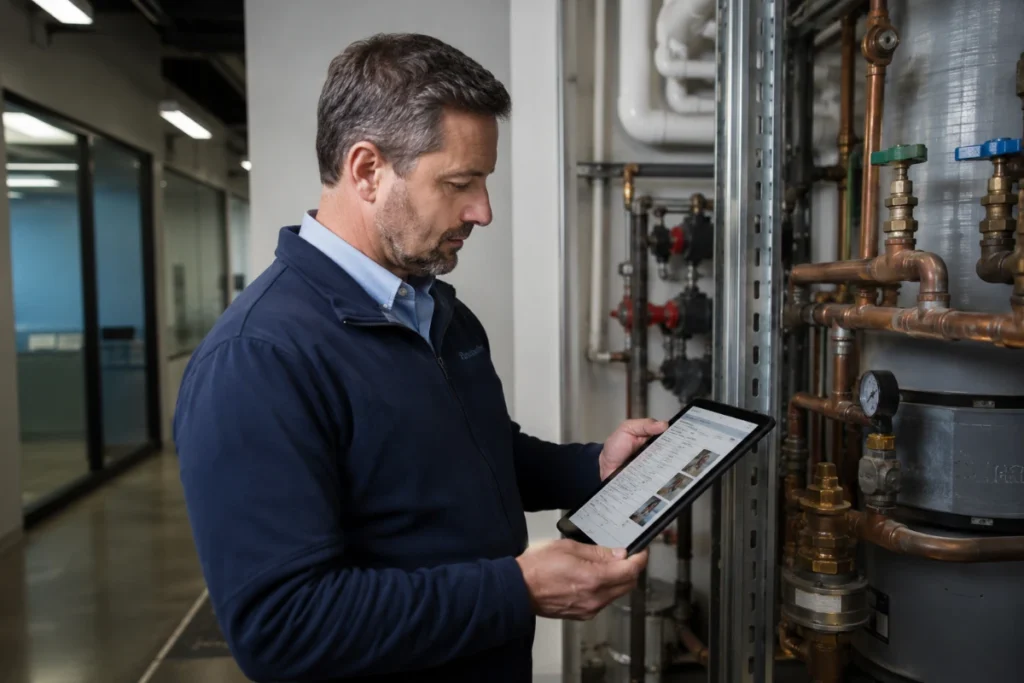
Commercial plumbing records do not need to be complicated.
At minimum, consider keeping:
| Record | What to document |
| Service history | Date, area serviced, reason for visit |
| Fixture problems | Repeated leaks, clogs, toilet or faucet problems |
| Pipe repairs | Location and type of repair |
| Drain issues | Which line or fixture was affected and whether it recurred |
| Water-heating equipment | Model information, service history, previous problems |
| Emergencies | What happened, what was shut down, and repairs performed |
| Recommendations | Items to monitor, repair, or replace later |
| Photos | Useful before-and-after or condition documentation |
For businesses with several locations or tenant spaces, consistent records can make recurring patterns easier to identify.
How Should the Plan Change for Different Types of Businesses?
Commercial properties should not all receive identical maintenance.
Offices and retail properties
Priorities may include:
- Customer and employee restrooms
- Breakroom sinks
- Toilets and faucets
- Leak monitoring
- Drain performance
- Hot-water availability
Restaurants and food-service properties
Plumbing may experience heavier use from:
- Kitchen sinks
- Hot-water systems
- Restrooms
- Drainage systems
Food-service plumbing can also be subject to requirements that do not apply to an ordinary office. Maintenance should be coordinated with applicable local rules and the specific equipment installed.
Warehouses and similar facilities
Relevant systems might include:
- Restrooms
- Utility sinks
- Floor drains where present
- Long piping runs
- Mechanical areas
- Water heaters
The appropriate priorities depend on what actually exists in the building.
What Should Be Included in an Emergency Plumbing Plan?
Preventive maintenance should also answer a simple question:
What happens if something still goes wrong?
The emergency portion of a commercial maintenance plan should identify:
- Who employees should contact
- The plumber’s contact information
- Main shutoff location
- Critical plumbing systems
- Which areas may need to be closed
- Who has authority to approve emergency repairs
- Where plumbing records are stored
Fisher Family Plumbing states that its commercial emergency line is answered by phone 24/7 to help assess the situation and coordinate the next response. The company does not state on that page that technicians are guaranteed to be dispatched on-site 24/7, so those two claims should not be treated as interchangeable.
Businesses can review the company’s commercial emergency plumbing services when developing their contact plan.
What Should You Ask Before Choosing a Commercial Maintenance Program?
Before agreeing to a plan, ask:
- What systems are inspected during each visit?
- How is the recommended service frequency determined?
- Are minor repairs included or separately approved?
- Is drain cleaning included?
- Are sewer-camera inspections included or optional?
- Are water heaters included?
- Is emergency service part of the agreement?
- How are inspection findings documented?
- Can the plan change if problems become more frequent?
- What services are specifically excluded?
The answers should be clear before service begins.
Commercial Plumbing Maintenance in Spring, Texas
A useful maintenance program should help a business understand its plumbing condition, identify developing concerns, and maintain a reliable service history. It should not be built around unnecessary services or promises that every plumbing problem can be prevented.
Fisher Family Plumbing offers commercial plumbing services and commercial plumbing maintenance programs for businesses in Spring and other communities shown in its current service-area structure.
Call (832) 844-7200 or request a quote and schedule a consultation to discuss the property, plumbing history, and maintenance priorities.
Frequently Asked Questions
How often should commercial plumbing be inspected?
There is no universal frequency for every building. Property type, daily usage, plumbing age and condition, recurring repairs, number of fixtures, and the effect of a plumbing shutdown should all influence the schedule. A business with repeated problems may need more frequent attention than one with lighter use and little repair history.
Is drain cleaning normally part of commercial plumbing maintenance?
It may be, but the scope depends on the maintenance agreement and the property. Some plans may focus on inspection and identifying slow or recurring drains, while actual drain cleaning is approved separately. Confirm what is included before starting a program.
Can preventive maintenance stop every plumbing emergency?
No. Preventive maintenance can help identify developing problems and create a consistent service history, but no maintenance plan can guarantee that a pipe will never fail, a drain will never clog, or another unexpected problem will never occur.
Should commercial water heaters be included in a maintenance plan?
Yes, when the property relies on hot water. The maintenance plan should account for the equipment’s condition, service history, performance issues, and manufacturer requirements rather than applying one universal maintenance schedule.
What plumbing records should a property manager keep?
Keep service dates, repairs, leak locations, recurring drain problems, equipment information, inspection findings, photographs where useful, and recommendations that have not yet been completed. Consistent records are particularly useful for multi-tenant or multi-location properties.
Are repairs normally included in a commercial maintenance agreement?
It depends on the agreement. An inspection or maintenance visit may identify repairs that require separate approval and billing. The agreement should state what labor, materials, minor repairs, emergency calls, and additional services are included.
External Sources
U.S. Environmental Protection Agency
WaterSense: Commercial Buildings
Used to verify commercial water-management principles involving planning, water-use monitoring, and leak detection.
WaterSense: Types of Facilities
Used to verify that water-management priorities can differ among commercial and institutional facility types and that regular leak checks are part of recommended water-management practices.
WaterSense at Work: Leak Detection and Repair
Used to support guidance about identifying and responding to leaks and water-use anomalies in commercial facilities.