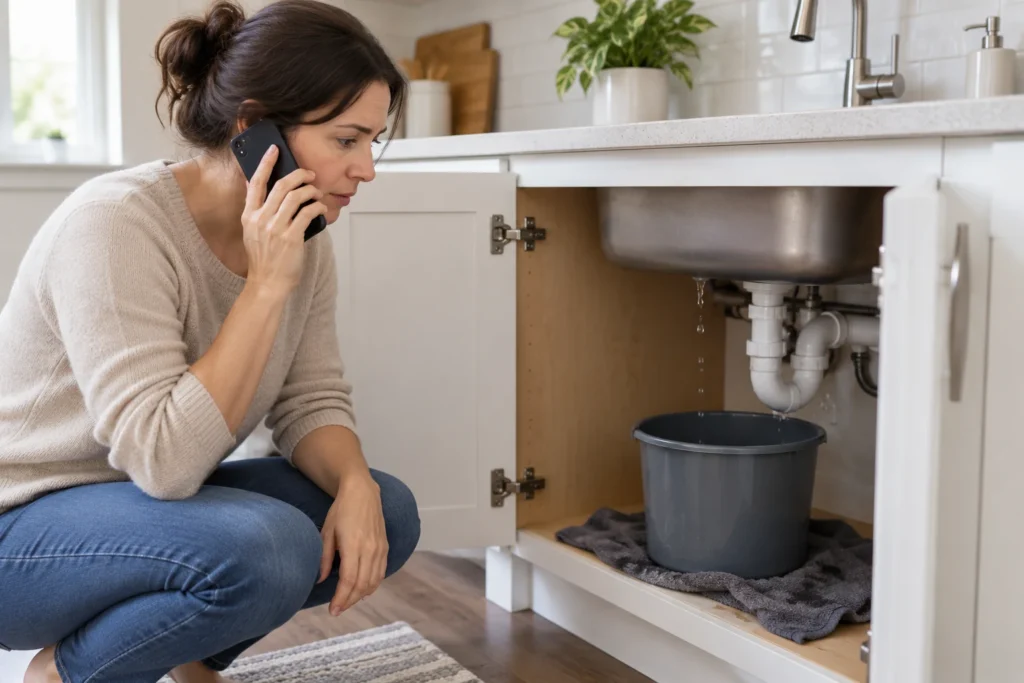
When you call a plumber, explain what is happening, where the problem is located, when it started, which fixtures are affected, and whether the situation is active or getting worse. Mention major leaks, sewage backups, overflowing fixtures, loss of water, or other urgent conditions at the beginning of the call.
You do not need to know the technical cause before calling. In most cases, it is more helpful to describe what you can see, hear, smell, and observe than to guess at the diagnosis.
What Information Should You Have Ready When Calling a Plumber?

A useful plumbing service call usually starts with six basic pieces of information.
1. What is happening?
Describe the symptom in plain language.
For example:
- A faucet will not stop dripping
- A toilet keeps running
- A sink will not drain
- Water is appearing under a cabinet
- Several drains are gurgling
- There is no hot water
- Water pressure suddenly dropped
- A ceiling has developed a water stain
You do not need to know whether the problem is caused by a valve, fitting, pipe, clog, or another component.
2. Where is the problem?
Be as specific as possible about the location.
Instead of saying:
“There is a leak somewhere.”
It is more useful to say:
“Water is collecting under the kitchen sink near the back of the cabinet.”
Other useful locations include:
- Upstairs guest bathroom
- Downstairs toilet
- Laundry room
- Garage water heater
- Ceiling below an upstairs bathroom
- Outside near the home’s water line
- Several fixtures throughout the house
3. When did it start?
Timing can help the plumber understand the pattern.
Mention whether the problem:
- Started suddenly
- Developed gradually
- Began after another fixture was used
- Appears only occasionally
- Started after recent plumbing or remodeling work
- Has been getting worse
4. Are multiple fixtures affected?
This is especially important with drains and water-pressure problems.
For example, one slow bathroom sink can mean something different from a sink, toilet, and shower all having trouble at the same time.
If several drains are slow or backing up, mention that during the call. Fisher Family Plumbing provides professional drain cleaning and unclogging for residential plumbing problems.
5. Is the problem active right now?
Tell the plumbing company whether:
- Water is currently leaking
- A toilet is overflowing
- Sewage is backing up
- Water continues to spread
- The affected fixture has stopped working
- The problem only happens when something else is used
This can help the company understand how urgent the request may be.
6. Has this happened before?
Mention relevant previous repairs or recurring problems.
Examples include:
- The same drain was cleared recently
- The toilet has been repaired before
- A pipe in the same area leaked previously
- The water heater has had repeated problems
- Plumbing was recently remodeled
- A new appliance was connected shortly before the problem began
You do not need to give the entire repair history of the house. Focus on details related to the current problem.
Do You Need to Know What Is Wrong Before Calling?
No. You do not need to diagnose the plumbing problem yourself.
Describing symptoms is usually more useful than assigning a cause.
For example:
Helpful:
“The toilet bubbles when the washing machine drains.”
Less helpful:
“My main sewer line definitely collapsed.”
The first description tells the plumber what actually happens. The second assumes a diagnosis that may or may not be correct.
Describe what you see
Examples:
- Water pooling
- Damp cabinets
- Staining
- Rust or corrosion
- A dripping fixture
- A toilet that refills by itself
Describe what you hear
Examples:
- Dripping
- Gurgling
- Running water
- Banging
- Bubbling
Explain what triggers the problem
Does it happen when:
- The toilet is flushed?
- The shower runs?
- The dishwasher drains?
- The washing machine empties?
- Hot water is used?
These patterns can be valuable when the plumber evaluates the system onsite.
What Should You Say First If the Problem Is Urgent?
Tell the plumbing company about serious conditions immediately rather than waiting until the end of the conversation.
Examples include:
- A burst pipe
- Major active leakage
- A toilet overflowing repeatedly
- Sewage entering the home
- Flooding or standing water caused by a plumbing failure
- No running water throughout the property
- A sudden major pressure loss with visible leakage
Fisher Family Plumbing’s current emergency plumbing service page identifies burst pipes, overflowing toilets, major leaks, sewer backups, loss of running water, and flooding as problems that may need urgent attention.
Do not assume that every service request receives immediate or after-hours dispatch. Current availability should be confirmed when calling.
What Should You Tell the Plumber About a Leak?
When calling about a leak, explain:
- Where the water appears
- Whether it drips or flows continuously
- How quickly the water is spreading
- Whether the leak only occurs when a fixture is used
- Whether cabinets, walls, ceilings, or floors are damp
- Whether the problem has happened before
If you cannot identify the source, say so.
That is exactly when residential plumbing services or professional leak evaluation may be appropriate. Fisher Family Plumbing currently lists leak detection and repair among its residential services.
What Should You Tell the Plumber About a Clogged Drain?
Give the plumber a quick picture of the drainage problem:
- Which fixture is clogged?
- Is it slow or completely blocked?
- Are other drains affected?
- Is there gurgling?
- Does water come up through another fixture?
- Is there an unusual odor?
- Is wastewater or sewage present?
- How long has the problem been happening?
- What have you already tried?
Avoid repeatedly pouring different chemical products into the drain before service. Tell the plumber if a drain cleaner or another product has already been used.
What Should You Tell the Plumber About a Toilet Problem?
Describe what the toilet is doing.
For example:
- Running between flushes
- Refilling unexpectedly
- Leaking around the base
- Overflowing
- Not flushing properly
- Bubbling when another drain is used
- Requiring repeated plunging
Fisher Family Plumbing provides faucet, sink, and toilet repair for common residential fixture problems.
What Should You Tell the Plumber About a Water Heater?
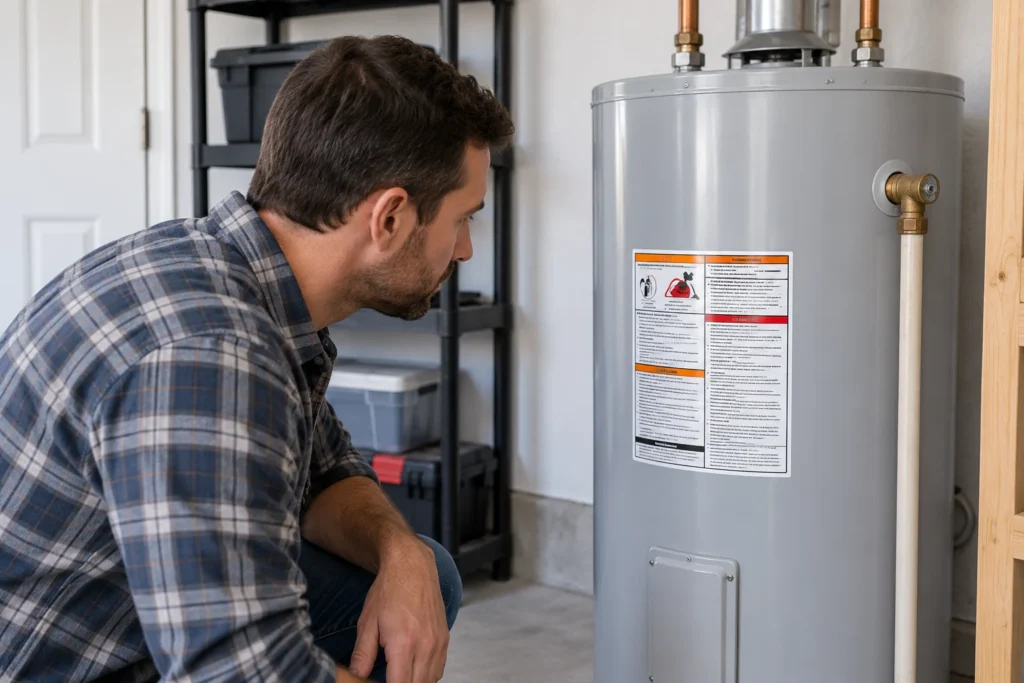
Useful information includes:
- No hot water
- Hot water running out faster than usual
- Inconsistent water temperature
- Visible water around the unit
- Unusual sounds
- Tank or tankless system, if known
- Gas or electric, if known
- Approximate age, if known
- Model information if it is easily and safely visible
Do not remove covers or panels to find information.
Fisher Family Plumbing provides water heater installation for traditional tank and tankless systems.
Should You Send Photos Before the Appointment?
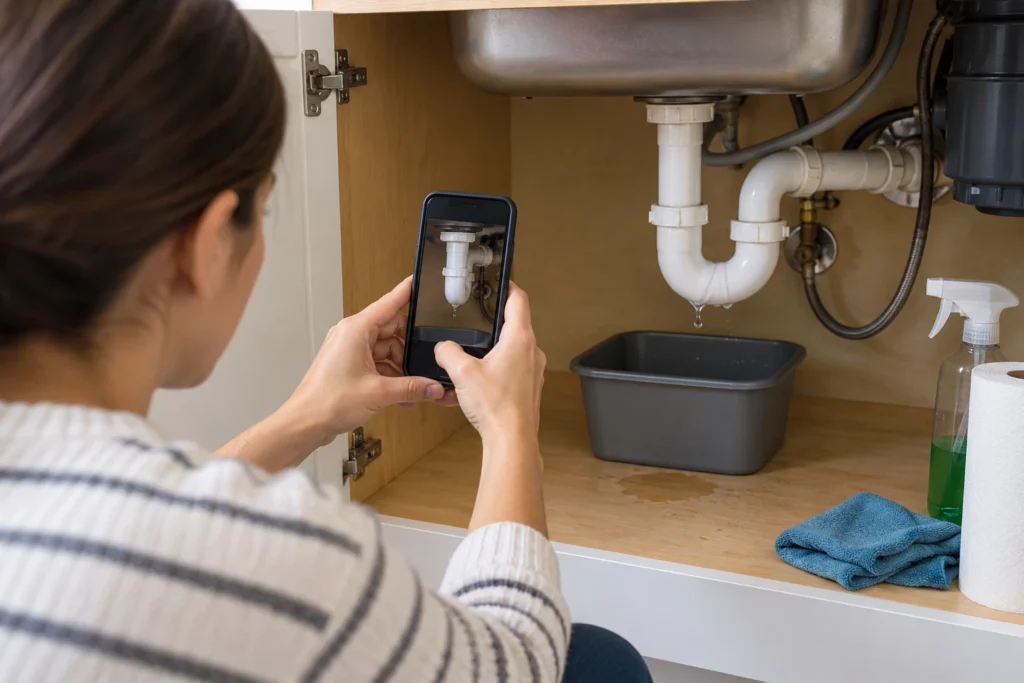
Photos can sometimes help explain what you are seeing, but they do not replace an onsite diagnosis.
Useful photos may show:
- A visible leak
- Water staining
- The affected fixture
- Water around a heater
- An accessible equipment label
- The general area where the problem occurs
Do not enter an unsafe space, handle sewage, remove equipment panels, or expose concealed plumbing just to take a photograph.
Fisher Family Plumbing’s exact photo-submission process should be confirmed before publishing instructions about texting, emailing, or uploading images.
What Should You Do Before the Plumber Arrives?
Keep preparation simple.
Make the affected area accessible
Move ordinary household items away from:
- Under-sink cabinets
- Toilets
- Water heaters
- Utility areas
- Other plumbing fixtures
Do not move heavy appliances or equipment if doing so may be unsafe.
Stop using a fixture that makes the problem worse
If flushing a toilet causes another drain to back up, or using a sink causes water to spread, stop using that fixture until the plumber evaluates the problem.
Gather relevant information
Have available:
- Previous repair information if relevant
- Equipment model information if easily accessible
- Notes about when the problem occurs
- A recent water bill if the issue involves unexplained water use
Keep pets away from the work area
This gives the plumber safe access and reduces distractions during the evaluation.
What Questions Should You Ask When Scheduling Plumbing Service?
The customer should be able to ask questions too.
Useful questions include:
- Do you need any additional information from me?
- Should I stop using the affected fixture?
- Would a photo be helpful?
- Do you need the water heater or equipment model number?
- Is this being treated as an urgent service request?
- What should I expect when the plumber arrives?
- Are there any diagnostic or service-call charges I should know about?
- How will repair options and pricing be discussed before work begins?
Texas consumers can also verify a plumbing contractor’s Responsible Master Plumber and ask for written estimates that clearly describe the work and payment terms.
What Happens After You Call?

The exact workflow varies, but a typical service request follows a simple process:
- You explain the plumbing symptoms.
- The company asks follow-up questions.
- The service request and urgency are identified.
- An appointment is arranged.
- The plumber evaluates the problem onsite.
- Repair options are discussed.
The phone conversation helps communicate the problem. The onsite evaluation is where the actual cause can be determined.
Calling a Plumber in Spring, Texas
If you need plumbing help in Spring or a nearby community, you do not need to know the technical name of the problem before reaching out.
Start with:
- What is happening
- Where it is happening
- When it began
- Which fixtures are involved
- Whether the problem is getting worse
Fisher Family Plumbing provides residential plumbing services for homeowners throughout Spring and surrounding communities. The company can be reached at (832) 844-7200 or through its contact page to request service or schedule a consultation.
Frequently Asked Questions
Do I need to know what is wrong before calling a plumber?
No. Describe what you see, hear, and experience rather than trying to identify the exact cause. The plumber can evaluate the system onsite and determine what is actually happening.
Should I send a plumber photos of the problem?
Photos may help communicate a visible leak, damaged fixture, water stain, or equipment information. They should not be used as a substitute for professional diagnosis, and you should never enter an unsafe area or dismantle equipment just to take a photo.
What should I tell a plumber about a clogged drain?
Explain which drain is affected, whether it is slow or completely blocked, whether other fixtures are involved, whether there is gurgling or backup, and what you have already tried.
What should I have ready when calling about a water heater?
Tell the plumber whether you have no hot water, inconsistent hot water, visible leaking, or another symptom. If you safely know whether the system is tank or tankless and gas or electric, that can also be useful.
Should I stop using the affected fixture before the plumber arrives?
If continued use causes water to leak, overflow, back up, or spread, stop using that fixture. If you are unsure what is safe to operate, ask the plumbing company when scheduling the service call.
Which plumbing problems should I mention as urgent?
Mention major leaks, burst pipes, sewage backups, uncontrolled overflowing fixtures, flooding caused by plumbing, loss of water throughout the home, or other conditions that may be actively damaging the property.
External Sources
Texas State Board of Plumbing Examiners
Consumer Information
Used to verify Texas guidance regarding Responsible Master Plumber verification, written estimates, licensing information, and consumer questions to consider when hiring a plumbing contractor.