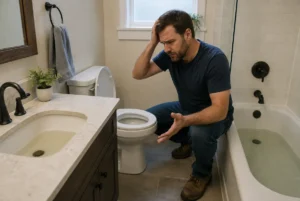
A backed-up drain is one of those plumbing problems that always seems to happen at the worst possible time: right before guests arrive, in the middle of a holiday cookout, or during the peak of a Texas summer heat wave when everyone is showering more and using more water than usual.
If you’re dealing with a drain backup in Spring TX, here’s exactly what to do, what not to do, and when to call a professional plumber before the situation gets out of hand.
Step 1: Identify the Scope of the Problem
Before reaching for a plunger or calling anyone, figure out where the backup is occurring. This tells you a lot about what you’re dealing with.
Single fixture backup: Only one drain is slow or blocked. This is typically a localized clog in the P-trap or the branch drain serving that fixture. A plunger or hand auger can often resolve this.
Multiple fixture backup: Two or more drains are backing up simultaneously, especially if you notice gurgling sounds in your toilet when you run the sink, or the tub backs up when you flush. This usually points to a blockage in your main drain line.
Sewage backup with odor: This is a plumbing emergency. Stop using all fixtures immediately and call an emergency plumber in Spring TX right away. Do not attempt to use any water in the home until the issue is resolved.
Step 2: What You Can Safely Try at Home
For single-fixture slow drains or minor blockages, these DIY steps are safe to try first:
The Plunger Method
Use a cup plunger for sink and tub drains. Create a tight seal around the drain and use firm, consistent plunges rather than wild thrusting. For toilets, use a flange plunger specifically designed for that purpose. Plunge 15 to 20 times and check whether water is moving.
Boiling Water and Dish Soap
For kitchen drains clogged with grease, pour dish soap down the drain followed by a pot of very hot (not boiling, to protect PVC pipes) water. The soap emulsifies the grease and helps it move through the pipe.
Baking Soda and Vinegar
Pour half a cup of baking soda down the drain, followed by half a cup of white vinegar. Let it fizz for 15 minutes, then flush with hot water. This is effective for mild organic buildup.
Drain Snake / Hand Auger
A hand auger (available at any hardware store) can reach deeper blockages that a plunger can’t dislodge. Insert it into the drain, turn the handle clockwise to feed it in, and work it back and forth when you feel resistance.
Step 3: What Not to Do
There are some common drain backup mistakes that make things significantly worse:
- Don’t use chemical drain cleaners repeatedly. Products like Drano work for some clogs but can damage PVC pipes with repeated use and won’t solve root intrusion or main line blockages.
- Don’t keep flushing or running water if multiple drains are backing up. You risk flooding your home with sewage.
- Don’t ignore gurgling sounds. Gurgling from a toilet or drain means air is trapped in the line, which is a sign of a partial blockage forming.
- Don’t assume the problem resolved itself if water eventually drains slowly. A slow drain means there’s still a partial blockage that will fully clog later.
Why Summer Increases Drain Backup Risk in Spring TX
Summer in North Houston brings several factors that make drain backups more common:
Increased household water usage. More showers, more cooking, more guests, and more laundry all add up. High-use periods stress pipes and push partial blockages over the edge.
Tree root intrusion. Texas summers are hot and dry. Tree roots actively seek moisture, and your sewer lines are a prime target. Roots can infiltrate through small joints and cracks in older clay or cast iron pipes. Once inside, they grow quickly and catch debris, causing full blockages.
Soil expansion and shifting. The expansive clay soil common throughout Spring TX shifts significantly during summer dry spells and again when rain returns. This movement can offset pipe joints underground, creating low points where solids collect.
Heavy rain events. Houston-area summer storms can overwhelm municipal sewer systems, causing backpressure that pushes sewage back through household drains. If this happens, a backflow prevention valve may be needed to protect your home.
When to Call Fisher Family Plumbing
Call us immediately if:
- More than one fixture is backing up
- You see or smell sewage in your home
- DIY methods haven’t cleared the backup
- Water is backing up from your floor drains
- You notice water damage near your foundation or in your crawl space
Our team is equipped with professional hydro-jetting equipment and camera inspection tools that can locate blockages anywhere in your line and clear them without damaging your pipes. We also offer professional drain cleaning services that go far beyond what any hardware store product can do.
Prevent Backups Before They Happen
The best drain backup is the one that never happens. Scheduling a preventive drain cleaning once a year is the most cost-effective way to stay ahead of blockages, especially for homes with older plumbing or mature trees in the yard.
Ready to get your drains in top shape before summer heat peaks? Call Fisher Family Plumbing at (832) 844-7200 or schedule online. We serve Spring TX, The Woodlands, Conroe, Tomball, and surrounding communities. Our team will get you taken care of quickly, professionally, and without the stress.