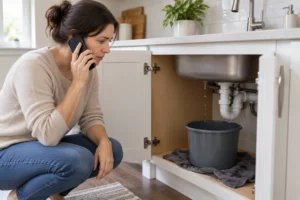
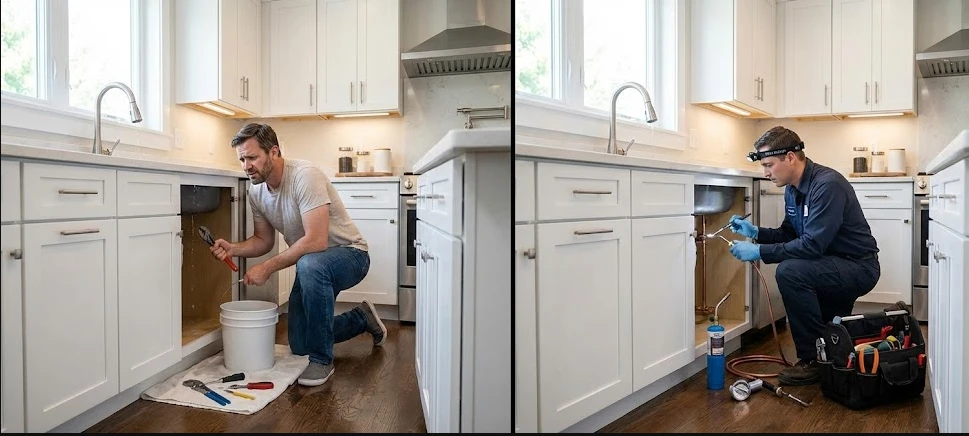
Homeownership contains plumbing issues. Whether it is dripping intubes, or even clogged pipes, most people have a feeling that these can be resolved without invoking the services of an engineer. Nevertheless, not all plumbing repairs can be handled by a do-it-yourself method. Having knowledge of DIY Plumbing Fixes vs Professional Repairs: What is safe? enables the homeowners to prevent expensive errors, water, and safety issues.
Whereas DIY solutions will help to save money in some cases, it is important to be informed about the boundaries of home repair in order to save your plumbing system and home.
The reasons why owners of homes want to do plumbing by themselves
Most homemakers would prefer self-repair plumbing as it seems fast and cheap. There are online guides and parts store solutions on how minor repair can be easily managed.
Common motivations include:
- saving service costs
- immediate problem solving
- convenience
- being taught the rudiments of home maintenance.
There are a few minor repairs that are quite safe in the context of DIY/professional plumbing choice as long as it is carried out properly.
Repairs in plumbing which are generally not risky to do
Some of the plumbing activities are not technical and are not that risky when done with care.
Fixing a dripping faucet
It is usually simple to replace washers or cartridges, and very simple tools are required.
Unclogging minor drains
Small blockages may be safely removed with the help of a plunger or searching snake on a manual basis.
Replacing showerheads
This is generally an easy to unscrew-and-install procedure that can be installed without much risk.
Bringing slack connections into being
Leaks on visible pipe joints can be only fixed by tightening of fittings or one can use plumbers tape.
These are the repairs that are called as low risk situations in DIY vs professional plumbing.
Plumbing work that involves professionals
Certain plumbing problems include concealed systems, building codes or customized equipments. These repairs require experience and trying them trial by trial will result in irredeemable damage.
Pipe replacements
The wrong installation may result in the break of the wall behind leaks or water.
Sewer line problems
The sewer systems need professional diagnostics and safety measures.
Water heater repairs
This is dangerous because of gas lines, electrical connections and pressure systems.
Major leaks or burst pipes
There are emergency cases when there is no time to lose, and it is necessary to professionally cope with such a situation to avoid flooding.
It is important to know when it is necessary to step down when considering DIY Plumbing Fixes vs Professional Repairs: What’s Safe?
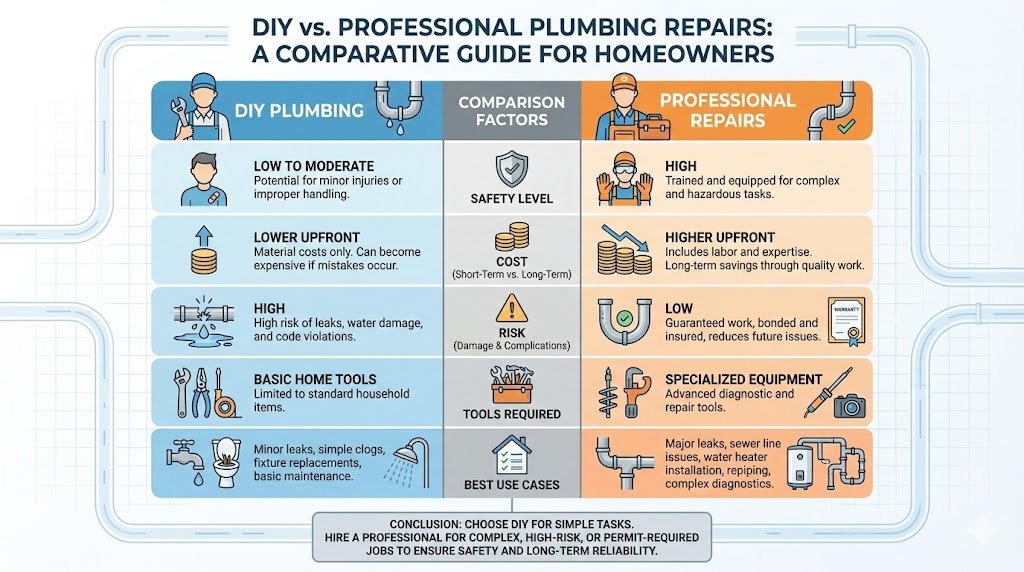
Risk comparison table
| Repair Type | DIY Safety Level | Risk if Done Incorrectly |
| Faucet repair | High | Minor leaks |
| Drain unclogging | High | Temporary blockage |
| Pipe replacement | Low | Water damage |
| Water heater repair | Very low | Safety hazards |
| Sewer repair | Very low | Health risks |
Cost considerations: DIY vs professional repair
DIY repairs may appear cheaper initially, but incorrect fixes often increase long-term costs.
| Factor | DIY Repair | Professional Repair |
| Upfront cost | Low | Moderate |
| Risk level | Higher | Lower |
| Long-term reliability | Varies | High |
| Warranty protection | None | Often included |
Balancing cost and safety is key when deciding between DIY vs professional plumbing options.
Trusted Plumbing Services by Fisher Family Plumbing
When you need dependable, professional plumbing solutions, Fisher Family Plumbing delivers expert service backed by years of experience and a commitment to customer satisfaction. Whether it’s routine maintenance, emergency repairs, or new installations, their skilled team ensures fast, reliable results you can count on. With a focus on quality workmanship and honest service, Fisher Family Plumbing makes keeping your home’s plumbing system in peak condition simple and stress‑free. Learn more about how Fisher Family Plumbing can help you with your next project by visiting FisherFamilyPlumbing your go‑to source for trusted plumbing services.
Red flags that will make you hire a plumber
There should not be any procrastinatory plumbing issues.
Seeking the professional attention of any of the following is advised:
- stains on walls or ceilings that are caused by water.
- reduced pressure of water all around the house.
- sewage odors
- recurring clogs
- sudden spikes in water bills
These symptoms are indicators of further on the systems problems than simple DIY solutions.
Tools that are safe to be used by homeowners
The homeowners can have a small plumbing toolkit to carry out basic maintenance:
- plunger
- adjustable wrench
- plumber’s tape
- hand auger
- bucket and towels
Chemical drain cleaners should be avoided as they may harm pipes and pose a safety risk.
The importance of preventive maintenance
Preventive maintenance lessens the necessity of DIY repairs as well as emergency repair.
Simple habits include:
- avoiding the sink grease disposal.
- cleaning drains regularly
- checking exposed pipes to leakages.
- anti-freezing of pipes in cold weather.
- checking the level of water pressure.
Preventive maintenance facilitates the safer decisions in DIY Plumbing Fixes vs Professional Repairs: Whats safe?
Mistakes associated with DIY plumbing
Most expensive repair starts with minor mistakes.
Frequent mistakes include:
- overtightening fittings
- the use of non- correct pipe materials.
- ignoring small leaks
- applying excessive sealant
- attempts to fix things without disconnection of water flow.
The knowledge of limitations will allow the homeowners not to transform simple issues into complicated ones and thus repairs.
How professionals repair add value
Professional plumbers offer experience that does not just end with repairs.
The professional advantages are:
- accurate diagnostics
- observance of building codes.
- specialized tools
- long-term solutions
- warranty-backed work
Professional repairs in complicated scenarios usually result in savings in cases of costs in the long run.
Safety checklist before attempting DIY plumbing
| Step | Action |
| Turn off water supply | Prevent flooding |
| Identify pipe type | Ensure compatibility |
| Use proper tools | Avoid damage |
| Test slowly | Check for leaks |
| Know when to stop | Call a professional |
Final thought
When it comes to small and low risk jobs, DITY plumbing may be simple and fulfilling. Plumbing systems are however connected to each other and errors can soon turn to costly damages. Knowledge in the timing of self-repair and contracting a professional can guarantee the principle of safety, efficiency, and durability. The best thing to be done is to not go either to DIY or professional worker, but to be aware of the proper balance between the two.