If you live in Spring TX, Porter TX, or anywhere in the greater Houston area, you’re almost certainly dealing with hard water. The groundwater that serves most communities in Harris County and the surrounding region contains high concentrations of calcium and magnesium, making it some of the hardest water in Texas. While hard water is safe to drink, it has real and measurable effects on your home’s plumbing system, fixtures, and appliances that add up significantly over time.
What Hard Water Actually Does to Your Pipes and Fixtures
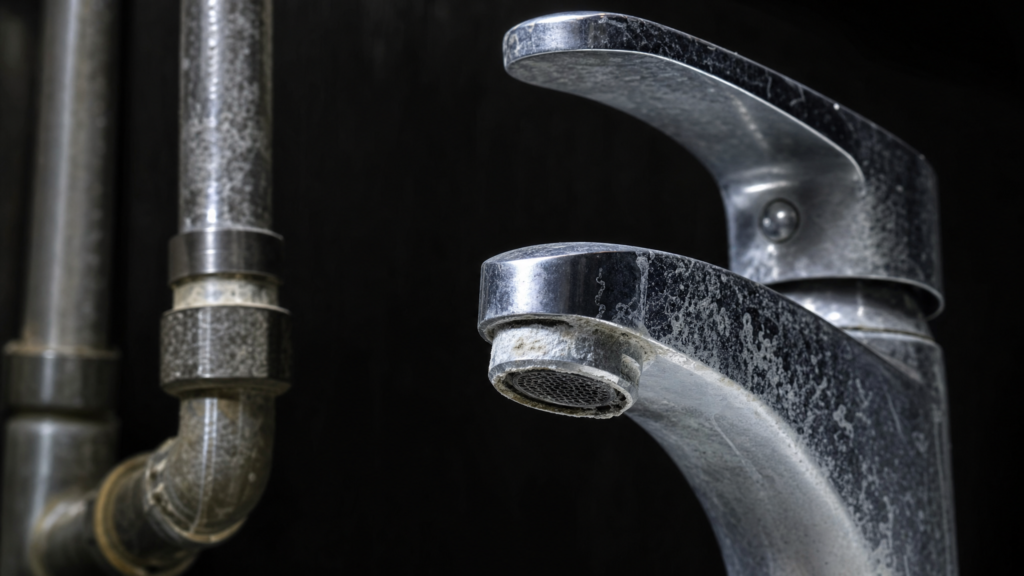
The minerals in hard water don’t stay dissolved forever. When water is heated or when it sits in contact with surfaces, those minerals precipitate out and adhere to whatever they’re touching. Over months and years, this creates limescale buildup, that chalky white or brownish crust you’ve probably noticed on your faucets, showerheads, and around drains.
Inside your pipes, the same process is happening invisibly. Limescale accumulates on the interior walls of supply lines, gradually reducing the effective diameter of the pipe. The result is progressively lower water pressure, harder-working fixtures and appliances, and eventually pipes that may need full replacement years earlier than they would in a soft-water environment.
Water Heaters: Your water heater works harder and uses more energy when hard water mineral deposits build up on the heating element or the bottom of the tank. The insulating layer of scale forces the heater to run longer cycles to reach temperature. Sediment buildup is one of the leading causes of premature water heater failure in Spring TX homes. Flushing your tank annually removes accumulated sediment and extends heater life.
Faucets and Fixtures: Hard water deposits clog aerators, showerheads, and valve seats. You’ve likely noticed that showerheads lose pressure over time as mineral buildup blocks the spray holes. Faucet cartridges and O-rings also degrade faster in hard water environments, leading to more frequent drips and valve failures.
Dishwashers and Washing Machines: Appliances that use water are also affected. Hard water can spot dishes and glassware, reduce washing machine effectiveness, and cause scale buildup in heating elements that shortens appliance lifespan.
Signs Hard Water Is Damaging Your Plumbing
You don’t need a water test to recognize hard water damage in progress. Look for these signs in your Spring TX home:
- White or yellowish scale deposits around faucet bases, showerheads, and where water pools
- Reduced water pressure from showerheads or faucet aerators
- Spots on dishes and glassware even after washing
- Soap that doesn’t lather well in the shower or sink
- A film or residue on your skin after showering
- Frequent faucet drips or valve problems
- Popping or banging sounds from your water heater (sediment boiling)
If you’re experiencing several of these simultaneously, hard water is actively working against your plumbing system. Addressing it now protects your investment in your pipes, fixtures, and appliances.
What You Can Do About Hard Water
There are several approaches to managing hard water in your home, ranging from targeted fixture maintenance to whole-home solutions:
Flush Your Water Heater Annually: This removes sediment that has settled at the bottom of the tank and prevents the efficiency loss and potential damage that comes from operating with a layer of scale on the heating element. Many homeowners in Spring TX skip this step, but it significantly extends water heater lifespan.
Clean Aerators and Showerheads Regularly: Remove showerheads and aerators every few months and soak them in a vinegar solution overnight. This dissolves limescale buildup and restores flow. It’s a simple maintenance task that costs nothing and takes minutes.
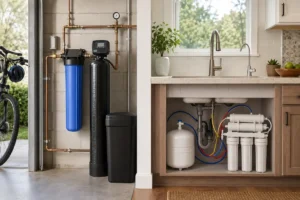
Whole-Home Water Softener: A water softener uses an ion exchange process to replace calcium and magnesium ions with sodium ions, producing soft water throughout your entire home. Softened water doesn’t produce scale, extends the life of all your plumbing and appliances, improves soap lather and skin feel, and can reduce your overall plumbing maintenance costs noticeably. This is the most comprehensive solution for homes with significant hard water issues.
Water Filtration Systems: For homeowners who want to address both mineral content and other water quality concerns, a residential water filtration system can be an excellent whole-home solution. These systems address a wider range of water quality issues and can be customized to your specific water profile.
The Long-Term Cost of Ignoring Hard Water
Hard water damage is cumulative. Individually, the effects are easy to dismiss. Collectively, the cost of premature pipe replacement, water heater failure, fixture replacement, and increased energy bills from scale-affected appliances can add up to thousands of dollars over the lifetime of your home.
Homeowners who address hard water proactively tend to have fewer plumbing emergencies, lower utility bills, and longer-lasting fixtures and appliances. If you’ve been dealing with any of the symptoms above, the investment in a water treatment solution typically pays for itself over time.
If you’ve noticed scale on your fixtures or suspect hard water is affecting your pipes, our team can evaluate your plumbing and recommend the right solutions for your home. We also handle repairs to fixtures and pipe sections that have been damaged by long-term mineral buildup, including pipe replacement when scaling has narrowed lines significantly.
Talk to Fisher Family Plumbing About Your Hard Water Options
Fisher Family Plumbing has helped homeowners throughout Spring TX, Porter TX, The Woodlands, and the Houston TX area deal with hard water’s effects on their plumbing for years. Whether you need a water treatment recommendation, fixture cleaning and repair, or a full plumbing evaluation, our team is ready to help. Call us today to discuss your options and protect your home’s plumbing from hard water damage.