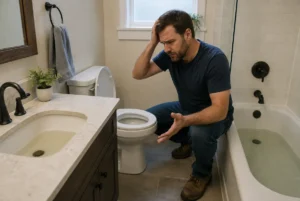
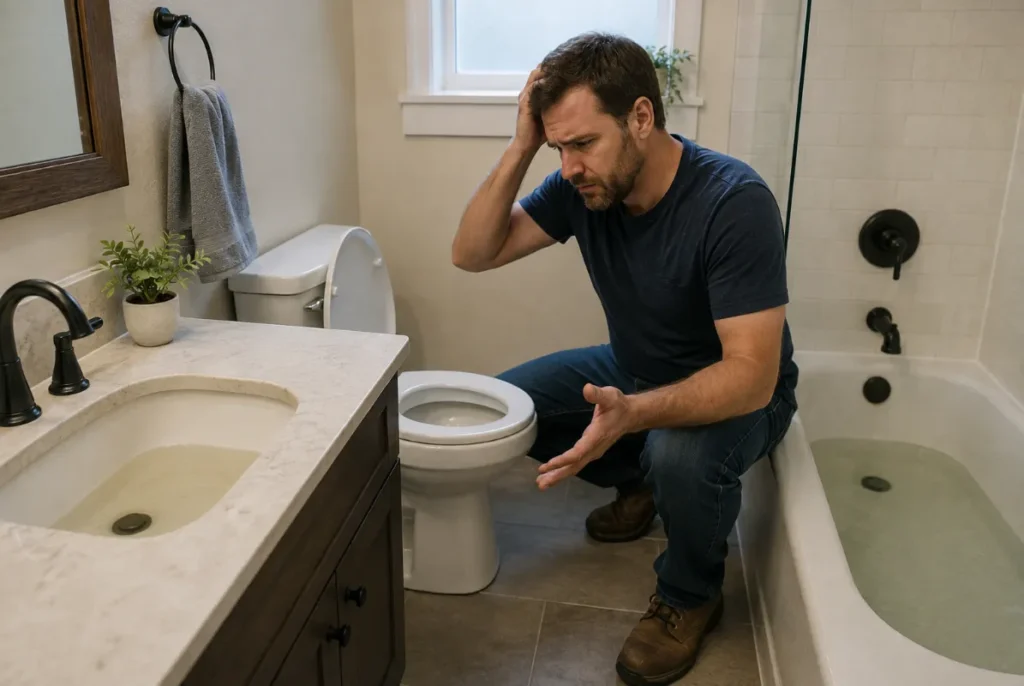
When multiple drains become clogged or slow at roughly the same time, the problem may be in a shared branch drain or the home’s main drain rather than in one fixture. Toilets that bubble, water rising in a bathtub when another fixture is used, and several lower drains backing up are signs that wastewater is having trouble moving through a larger part of the drainage system.
Do not assume every slow drain has a separate clog. Pay attention to which fixtures are affected and what happens when water is used elsewhere in the home. If wastewater begins entering a tub, shower, or floor drain, stop using water and arrange a professional evaluation.
What Does It Mean When Several Drains Clog at Once?
The location of the problem often affects how many fixtures show symptoms.
A sink, toilet, tub, or shower has its own drain connection. Several nearby fixtures may then feed into a shared branch. Those branches eventually connect to the building’s main drain, which carries wastewater toward the private sewer lateral and public sewer system.
One clogged fixture is usually a localized problem
When only one sink or shower drains slowly, the obstruction may be close to that fixture. Hair, soap residue, food debris, grease, or a foreign object can restrict a fixture trap or nearby drain.
A single clogged fixture does not usually explain why drains in several rooms suddenly stop working properly.
Several fixtures may share one blocked branch
A sink, toilet, tub, and shower in the same bathroom may connect to a common branch drain. A blockage in that shared section can cause more than one fixture to:
- Drain slowly
- Gurgle
- Bubble
- Give off an unpleasant odor
- Back up when another fixture is used
The pattern suggests a shared problem, but it does not reveal the exact location or cause.
Problems throughout the home may involve the main drain
When fixtures in different rooms or on different sides of the home are affected, the restriction may be farther downstream. A main building drain or private sewer-line problem can interfere with wastewater leaving the entire property.
Fisher Family Plumbing’s drain-cleaning service covers kitchen, bathroom, and main sewer-line blockages for homeowners in Spring and surrounding communities.
Which Drain Patterns Suggest a Deeper Blockage?
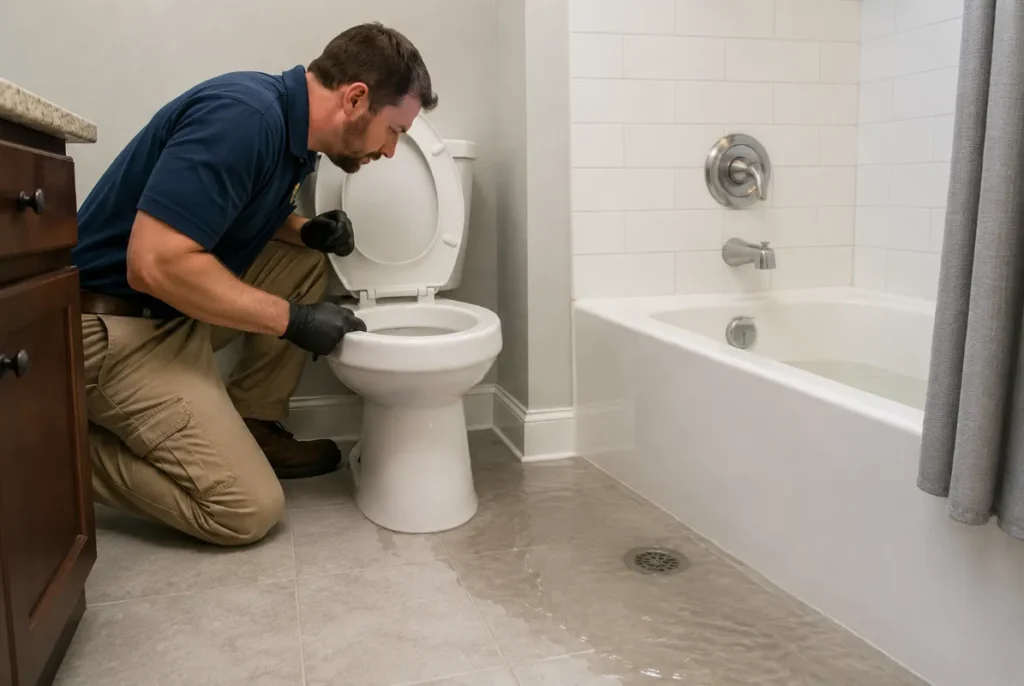
Several symptoms are particularly helpful when trying to determine whether fixtures are reacting to the same restriction.
The toilet bubbles when another fixture drains
A toilet may bubble or gurgle when water from a sink, shower, or washing machine passes through a restricted drain line. The normal movement of water and air is being disrupted somewhere in the connected system.
Bubbling does not prove that the main sewer line is blocked, but it is worth investigating when it happens repeatedly or affects more than one room.
Water rises in the tub or shower when the toilet flushes
A bathtub or shower is often lower than a sink or toilet opening. When wastewater cannot continue downstream, it may move toward another available low point.
Water appearing in a tub after a toilet is flushed is more concerning than an ordinary slow tub drain because the two fixtures are reacting to the same flow.
The washing machine makes another drain back up
A washing machine releases a relatively large amount of water over a short period. That discharge may expose an existing restriction that was less noticeable when only a faucet or shower was running.
You might notice:
- A nearby toilet bubbling
- Water rising in a utility sink
- A shower or floor drain backing up
- Gurgling from another part of the home
Stop running the washing machine when its discharge causes water to return through another fixture.
Several drains become slow within a short time
One slow sink may be a local clog. A kitchen sink, bathroom sink, tub, and toilet all becoming slow during the same period suggests the fixtures may share a downstream problem.
Treating each fixture separately may provide little or no improvement when the actual obstruction is in a larger shared line.
The lowest drain backs up first
Wastewater frequently appears at a low fixture because it has fewer places to go when the downstream route is blocked. Depending on the home, this may be:
- A ground-floor shower
- A bathtub
- A floor drain
- A utility-room drain
- A low toilet
The first fixture to back up is not necessarily where the blockage is located.
Could the Problem Be Limited to One Part of the House?
The number and location of affected fixtures provide clues, but only an inspection can determine the source.
| Pattern noticed | Possible area involved | Recommended response |
| One sink or shower is slow | Fixture trap or nearby drain | Arrange service if the problem persists |
| Several fixtures in one bathroom are affected | Shared bathroom branch | Schedule a drain evaluation |
| Kitchen and laundry fixtures react together | Shared branch or downstream restriction | Stop the triggering appliance and request service |
| Fixtures throughout the house are slow | Main drain or private sewer lateral | Limit water use and contact a plumber |
| Nearby properties have similar backups | Possible public sewer issue | Contact the sewer provider and a plumber as appropriate |
| Sewage enters a tub, shower, or floor drain | Serious wastewater backup | Stop using water, avoid contact, and seek prompt help |
These patterns help organize the next step, but they should not be treated as a diagnosis.
What Can Cause Multiple Drains to Back Up?
Several conditions can restrict a shared drain or sewer line.
Accumulated grease, soap, hair, and debris
Material can collect inside a drain over time and gradually reduce the available opening. A partial restriction may first appear as occasional gurgling or slow drainage before several fixtures begin backing up.
Foreign objects or unsuitable products
Items that do not break down properly can become lodged in a toilet, branch drain, or larger line. Other waste and debris may then collect around the obstruction.
Root intrusion
Roots may enter buried piping through openings, joints, cracks, or damaged areas. The roots can restrict flow and collect waste passing through the line.
Root intrusion is only one possible cause. It should not be assumed without an appropriate inspection.
Damaged, shifted, corroded, or collapsed piping
Drain cleaning can remove material inside a pipe, but it cannot restore a pipe that has cracked, shifted, collapsed, or lost its proper alignment.
Recurring symptoms after clearing may be a reason to evaluate the condition of the line rather than repeatedly treating each clog as an isolated event.
Fisher Family Plumbing currently has a dedicated sewer-line repair page for Spring, but the exact residential repair methods offered should be confirmed before particular solutions are promoted.
A public sewer-system problem
Not every whole-house backup originates within the home’s private plumbing.
A problem may be more likely on the public side when:
- Nearby homes are experiencing similar symptoms
- Wastewater returns when no one in the home is using water
- Sewage is visible near a public manhole
- The sewer provider has reported a service problem
Spring-area properties may be served by different utilities or municipal utility districts. Use the provider information shown on the water or sewer bill rather than assuming one agency serves every address.
What Should You Do When Multiple Drains Are Backing Up?
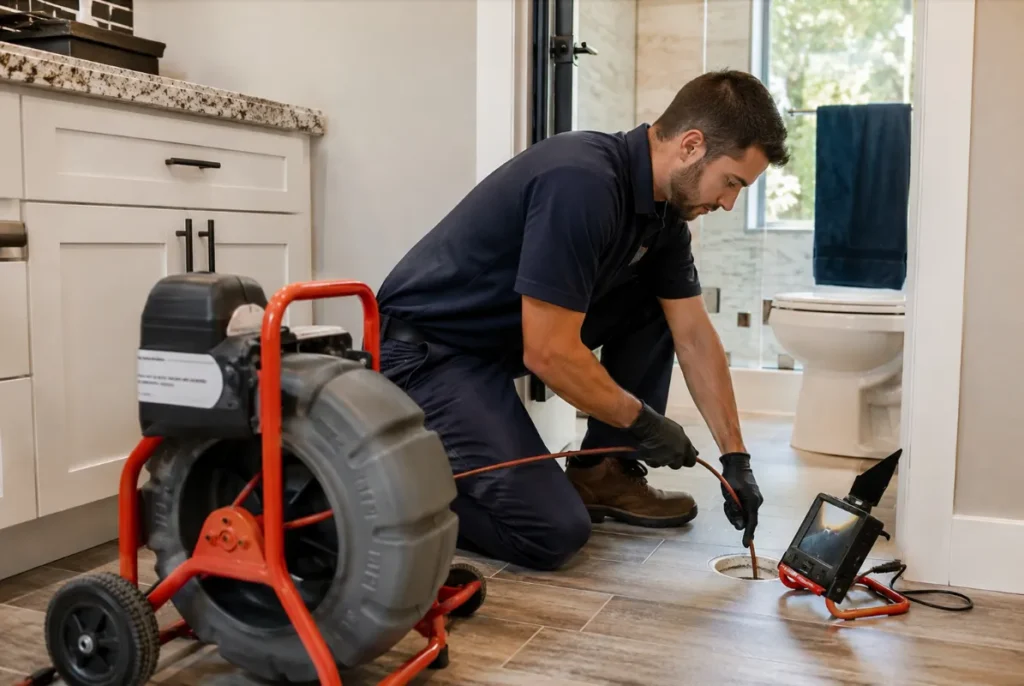
The safest immediate step is to stop adding water to the drainage system.
- Stop flushing toilets.
- Turn off faucets and showers.
- Do not run the dishwasher or washing machine.
- Keep children and pets away from wastewater.
- Avoid using several chemical drain products.
- Note which fixtures are affected and what triggers the backup.
- Contact a plumber for a professional drain evaluation.
- Contact the sewer provider if a public-system issue appears possible.
Do not open a sewer cleanout, dismantle fixtures, climb onto the roof, or operate powered drain-clearing equipment without appropriate training.
For a suspected shared blockage, professional drain cleaning and unclogging is more appropriate than repeatedly treating individual fixtures.
When Is a Multi-Drain Clog an Emergency?
Request prompt help when sewage is entering the home, wastewater is spreading, the property has no usable toilet, or water is near electrical equipment.
Sanitary sewer overflows and backups can damage property and threaten public health. EPA identifies blockages, line breaks, sewer defects, power failures, and system problems among possible causes of sanitary sewer overflows.
Sewage is backing into a tub, shower, or floor drain
Stop water use throughout the home. Keep people and pets out of the area, and do not handle wastewater without proper protection.
CDC advises avoiding contact with standing water that may contain sewage because exposure can cause illness.
Wastewater is spreading into living areas
Do not walk through contaminated water unnecessarily. Keep the affected area isolated and avoid moving contaminated materials through clean parts of the home.
The home has no usable toilet or drain
When every toilet or major drain is affected, the property may no longer have safe, functional sanitation. This usually requires faster professional attention than one slow fixture.
Water or sewage is near electrical equipment
Stay away from the area. Do not touch electrical devices, cords, outlets, panels, or appliances while standing in water.
Fisher Family Plumbing lists drain cleaning among its residential services and provides plumbing assistance for Spring and nearby communities. Exact after-hours technician availability and response times should be confirmed directly when calling.
How Does a Plumber Find the Source of Multiple Clogged Drains?
A professional drain evaluation begins with the pattern of symptoms.
The plumber may ask:
- Which fixture showed trouble first?
- Are the affected fixtures in one room or throughout the property?
- Does one fixture trigger another?
- Is wastewater returning through a low drain?
- Has the problem happened before?
- Were previous clogs cleared?
- Are nearby properties affected?
The next steps may include inspecting accessible drain points, testing how fixtures drain, and using professional clearing equipment appropriate for the suspected location.
A camera inspection may be considered when clogs recur or pipe damage is suspected. However, camera use and equipment should not be promised until Fisher Family Plumbing confirms that this service is available for the affected line.
Is Drain Cleaning Enough, or Could the Sewer Line Need Repair?
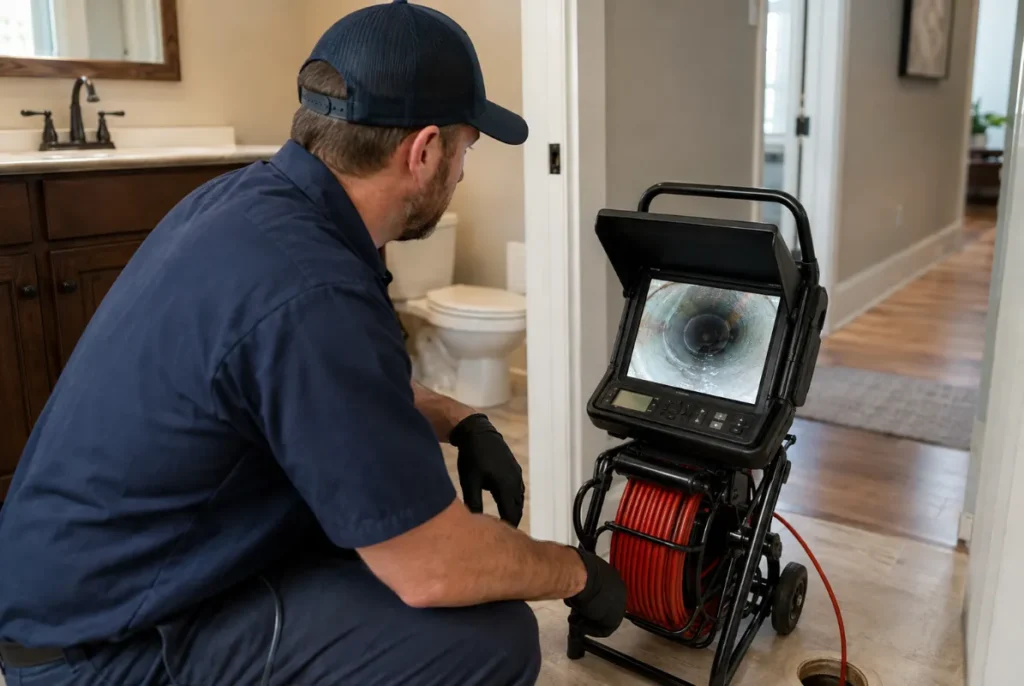
The answer depends on what caused the restriction.
Drain cleaning may be sufficient when:
- Removable buildup is restricting flow
- A foreign obstruction can be cleared
- The line remains structurally functional
- Normal drainage returns and the problem does not recur
Additional evaluation may be appropriate when:
- The blockage returns shortly after service
- The same line has required repeated clearing
- Drainage remains poor after the obstruction is removed
- Pipe damage is suspected
- Root intrusion continues
- A section may be cracked, shifted, or collapsed
Recurring clogs do not automatically mean the entire sewer line needs replacement. A plumber should evaluate the location, extent, and cause before recommending repair or replacement.
How Can You Help Prevent Another Whole-House Backup?
Not every backup can be prevented, but several habits may reduce avoidable drain buildup:
- Keep grease and unsuitable materials out of drains
- Address recurring slow drainage before several fixtures are affected
- Do not treat repeated clogs as unrelated indefinitely
- Avoid relying on chemical products as a recurring solution
- Ask whether additional inspection is appropriate when the problem returns
Fisher Family Plumbing’s existing guide offers additional tips for keeping household drains clear. The new article should link to that resource rather than repeating its entire prevention checklist.
Schedule Drain Cleaning in Spring, Texas
Several slow or backing-up fixtures may indicate that the obstruction is deeper than one sink or shower drain.
Fisher Family Plumbing provides drain cleaning services in Spring, Texas and serves homeowners in Porter, Kingwood, New Caney, Humble, Atascocita, and surrounding communities.
Call (832) 844-7200 or request a quote and schedule a consultation to explain which fixtures are affected and what happens when water is used elsewhere in the home.
Frequently Asked Questions
Does more than one clogged drain always mean the main sewer line is blocked?
No. Several fixtures in one bathroom or part of the home may share a blocked branch drain. Fixtures throughout the house are more concerning for a main building drain or private sewer-line problem, but professional evaluation is needed to locate the restriction.
Why does my toilet bubble when the shower or sink drains?
The water entering a restricted shared line may disrupt normal airflow and pressure inside the drainage system. That disturbance can cause bubbling or gurgling in a connected toilet. Repeated cross-fixture reactions are a reason to schedule drain service.
Why does water come up in the bathtub when I flush the toilet?
The toilet and bathtub may share a downstream drain. If wastewater cannot continue through that line, it may return through the lower bathtub or shower opening. Stop flushing and avoid using other fixtures until the system is evaluated.
Should I keep using water when several drains are backing up?
No. Continued use adds more wastewater to a system that may already be restricted. Avoid flushing toilets and running faucets, showers, washing machines, and dishwashers until the cause is addressed.
When is a sewer-camera inspection useful for recurring clogs?
A camera inspection may be helpful when clogs return, drainage remains poor after clearing, or pipe damage is suspected. It can provide information about accessible portions of the line, but its usefulness depends on the blockage, pipe condition, and equipment available.
External Sources
U.S. Environmental Protection Agency
Sanitary Sewer Overflows
Used to verify that sanitary sewer overflows can back up into buildings, damage property, threaten public health, and result from conditions such as blockages, line breaks, or sewer defects.
https://www.epa.gov/npdes/sanitary-sewer-overflows-ssos
Sanitary Sewer Overflow Frequently Asked Questions
Used to verify health concerns associated with untreated or partially treated sewage entering public or private areas.
https://www.epa.gov/npdes/sanitary-sewer-overflow-sso-frequent-questions
Centers for Disease Control and Prevention
Guidelines for Septic and Onsite Wastewater Systems
Used to verify guidance to avoid contact with standing water that may contain sewage.
https://www.cdc.gov/floods/safety/guidelines-for-septic-and-onsite-wastewater-systems.html