You are not using extra water. You have not changed anything about your daily habits. But your water bill keeps climbing, and sometimes you hear what sounds like water running even when every faucet is off. If this sounds familiar, you may be dealing with a slab leak, and it is one of the most important plumbing issues to catch early in Spring, TX.
Slab leaks are more common in Spring and North Houston than most homeowners realize. The combination of clay soil, slab foundations, and hard water creates conditions where pipes under the concrete can corrode, crack, or shift over time. Fisher Family Plumbing specializes in slab leak detection for Spring TX homes, and this guide covers exactly what to watch for and when to call.
What Is a Slab Leak?
A slab leak is any leak in the water supply or drain pipes that run underneath your home’s concrete slab foundation. These pipes are typically copper or galvanized steel, buried several inches below the slab. When they develop a leak, that water has nowhere to go except into the soil beneath your foundation or, eventually, up through cracks in the slab itself.
In Spring, TX, slab leaks are particularly common because of the expansive clay soil throughout Harris County and the surrounding area. This soil swells when wet and shrinks when dry. Every time it cycles, it exerts pressure on buried pipes. Over time, that movement causes micro-fractures in copper pipes, especially in homes built in the 1970s through 1990s when thinner copper was common.
Signs You May Have a Slab Leak in Your Spring TX Home
Your Water Bill Is Going Up for No Reason
A slow slab leak can lose hundreds of gallons per week. If you have not changed your water usage but your bill has increased, water is going somewhere. Compare your bills from the same month last year. A 20 percent or greater increase without explanation is worth investigating.
You Hear Water Running When Nothing Is On
Turn off every appliance and fixture in your home. Stand in a quiet area close to the floor and listen. A faint hissing or running water sound, especially near the center of the house where main lines often run, is a strong indicator of a leak under the slab. This sound often stops when you are near the source.
Hot or Warm Spots on the Floor
If your home has a hot water line under the slab and it is leaking, you will often feel warm or hot patches on the floor, particularly on tile or hardwood. Walk through your home in bare feet in the morning when the floor temperature is most uniform. Warm spots on a cool floor are a telltale sign of a hot water slab leak.
Damp Carpet, Wet Flooring, or Mold Smell
Water seeping up from a slab leak eventually saturates the flooring above it. If you notice a section of carpet that feels damp without any spill or rain, or if you start detecting a musty or mildew smell from a specific area, do not assume it is a humidity issue. Mold under flooring grows fast when there is a continuous moisture source below.
Cracks in Your Foundation, Walls, or Flooring
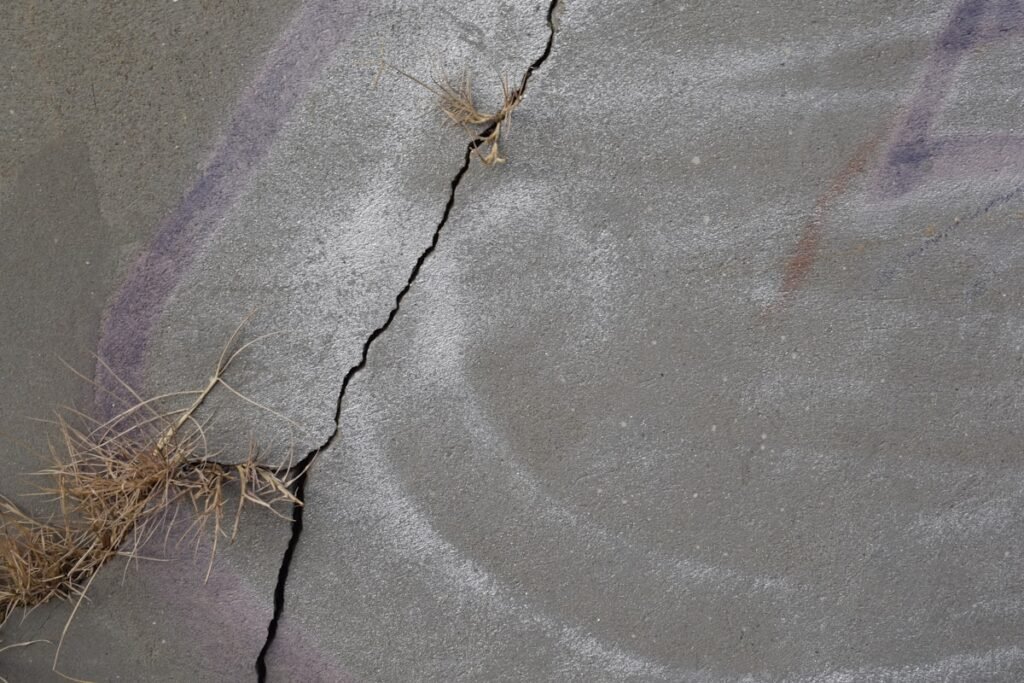
Water from a slab leak erodes the soil beneath the concrete over time. That erosion creates voids, and voids lead to settlement and cracking. New cracks in your interior walls, tile grout, or the slab itself can all be downstream effects of a leak that has been active for months. If you see new structural cracking alongside any water-related symptoms, call a plumber before a structural engineer, since the root cause may be the pipe.
Your Meter Keeps Running
Here is a quick test you can do yourself: turn off every water-using appliance and fixture in your home. Go to your water meter and look at the small triangle or dial indicator. If it is moving, water is flowing through your main line somewhere. If all fixtures are off, that flow is going into a leak.
How Slab Leaks Are Detected
Professional slab leak detection uses specialized equipment to locate leaks without immediately breaking open your floor. Fisher Family Plumbing uses electronic leak detection tools including acoustic listening devices that amplify the sound of escaping water through the slab, and pressure testing that isolates specific pipe sections to confirm whether a leak is present.
The goal is to identify the exact location of the leak before any repairs begin. Pinpointing the leak means a smaller jackhammer opening, lower repair costs, and faster completion. A plumber who simply breaks open the slab at a rough location is doing it wrong. We find it precisely first.
What Happens If You Ignore a Slab Leak
Slab leaks that go unaddressed for months cause escalating damage. Here is the sequence: the pipe continues losing water, the soil beneath the foundation continues to erode, voids form under the slab, the slab begins to settle unevenly, and then you have both a plumbing repair and a foundation repair on your hands. Foundation work in Spring, TX runs from several thousand to over $20,000 depending on severity. A slab leak repair caught early is a fraction of that cost.
Get a Slab Leak Inspection in Spring TX
Fisher Family Plumbing provides thorough slab leak detection and repair for homes throughout Spring, TX, The Woodlands, Conroe, Tomball, and surrounding communities. Our team understands the unique challenges of North Houston construction, from the clay soil movement to the copper pipe age ranges common in this area.
If you are seeing any of the signs above, do not wait. Contact our slab leak repair team or call (832) 844-7200. For after-hours emergencies, our emergency plumber service is available to respond. The sooner you know, the less it costs to fix.
Fisher Family Plumbing | 28861 Llano River Loop, Spring TX 77386 | (832) 844-7200